
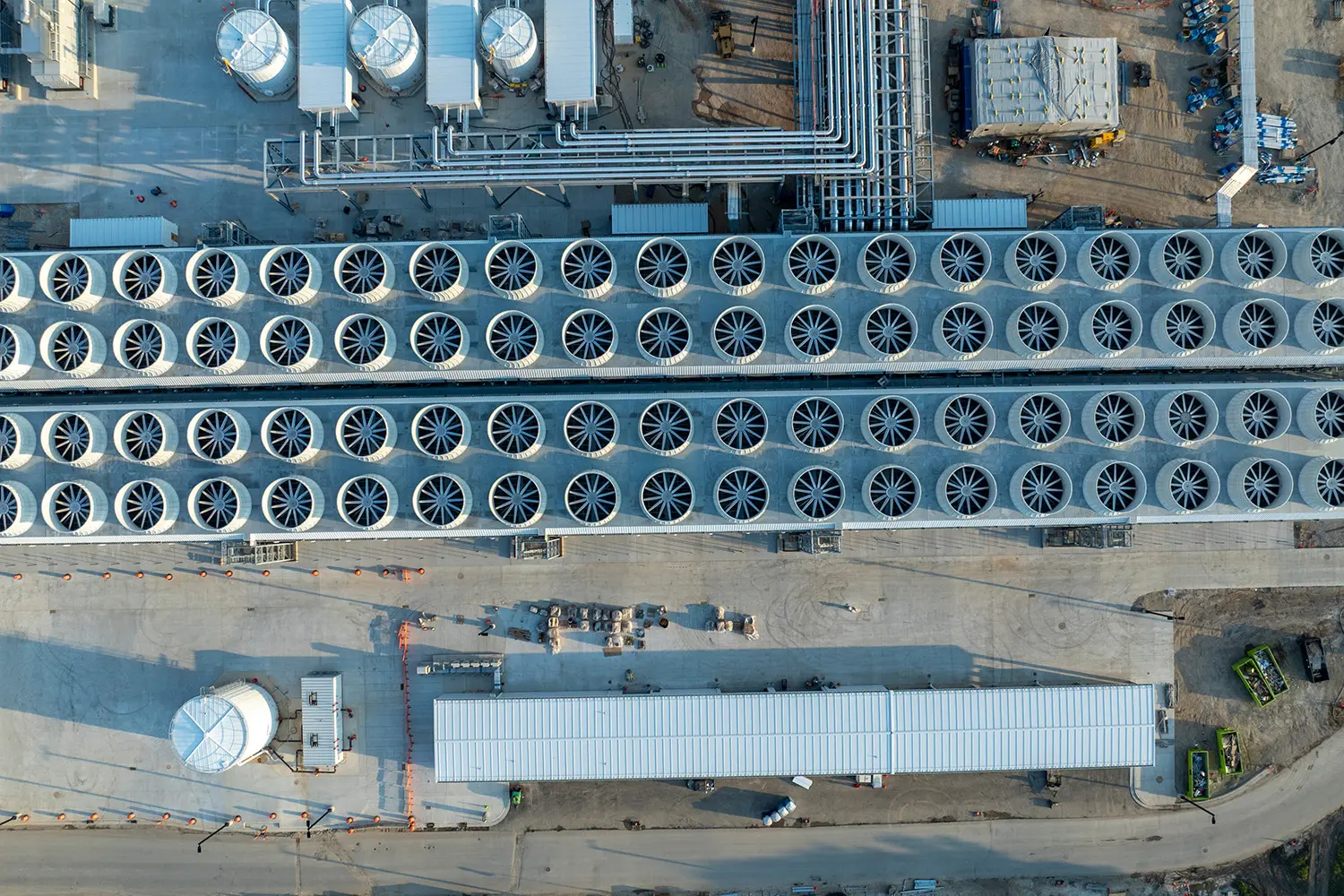
America is racing to build the infrastructure needed for artificial intelligence, and that race is beginning to reshape communities far beyond Silicon Valley. Data centers are getting larger, electricity demand is rising, and developers are looking for ways to build new power plants fast enough to keep thousands of servers running around the clock. At the same time, the federal government is proposing changes that could make parts of the permitting process less public, which raises a basic question: If a new industrial facility may affect the air people breathe, why should nearby residents have fewer opportunities to speak before it is built?
In July, the Environmental Protection Agency proposed changing the rules for something called Minor New Source Review, or Minor NSR. The name makes it sound like we are talking about tiny sources of pollution, but that can be misleading. New Source Review is part of the Clean Air Act permitting system for factories, power plants and other stationary sources of air pollution. Whether a source is considered “major” or “minor” depends largely on regulatory pollution thresholds, not whether the facility looks small or whether neighbors consider its emissions insignificant.
Under existing federal regulations, state Minor NSR programs must include minimum requirements for public participation. EPA’s proposal would eliminate those federal minimums and leave decisions about whether, when and for how long the public gets to participate to state and local air agencies. EPA says this would reduce administrative burdens and speed permitting while allowing local regulators to decide what works best for their communities.
That does not mean public participation would suddenly disappear everywhere. California, for example, could maintain stronger requirements, and other states could do the same. The concern is that a federal floor exists for a reason. Once that floor disappears, public access depends more heavily on where you live and what your state or local regulators decide to require.
This matters because public notice is not simply paperwork standing between a developer and a construction crew. It may be how people first learn that a pollution source is planned near their homes. Public participation can allow residents to review a proposed permit, submit information, request a hearing and challenge decisions through the procedures available in their state. EPA’s own website describes public participation as one way people can help ensure that pollution sources comply with applicable requirements.
The timing of the proposal is especially important because the country is experiencing an extraordinary data center construction boom. As we have covered before at False Solutions, these facilities are no longer just large buildings filled with computers. Increasingly, the question is how to provide the enormous amounts of electricity they require. Some developers are considering gas turbines, engines and other power generation located directly at data center sites, allowing facilities to produce some or all of their own electricity.
EPA is actively making room for that model. In July, the agency issued guidance concluding that certain power plants that are not connected to the public electricity grid, sometimes called “islanded” power generation, are not subject to the Clean Air Act’s Acid Rain Program. EPA specifically said the guidance expands opportunities for companies to develop these power facilities for data centers and gives developers more flexibility in how quickly and where they can build them.
That follows another EPA proposal from May that would allow developers to begin constructing certain non-emitting portions of major projects before receiving a major New Source Review permit. EPA specifically listed power generation and data centers among the projects that could benefit. The agency argues that foundations, wiring, piping and other non-emitting structures do not themselves pollute the air and therefore should not have to wait.
Each policy can be debated separately, and the Minor NSR proposal does not apply to every data center or power plant. But viewed together, they reveal a broader direction. The federal government is looking for ways to make industrial and energy projects easier and faster to build at the same moment AI companies are demanding extraordinary amounts of new infrastructure.
Speed may be useful to developers, but speed is not automatically useful to the people who live next door.
That distinction gets lost when public participation is described as “red tape.” A public notice does not stop a project. A comment period does not automatically reject a permit. These procedures simply create a window in which people outside the company and government agencies can examine what is being proposed and raise concerns before decisions become much harder to reverse.
This is especially important in communities that already live with highways, warehouses, refineries, power plants and other pollution sources. A permit may evaluate one facility, but the family living nearby breathes the combined pollution from everything around them. Residents may also know things that are not obvious from engineering plans, including where children play, where traffic already backs up, which neighborhoods experience odors or soot, and how many industrial facilities have accumulated within a few miles.
We have previously written about the data center backlash arriving in California and why communities no longer trust mega-projects. The connection is becoming difficult to ignore. When communities feel that enormous projects are being planned first and explained later, distrust should not be surprising.
AI may be new technology, but the political pattern surrounding industrial development is very old. A company promises jobs, investment and progress.
Government officials focus on moving the project forward. Environmental safeguards become delays, public hearings become obstacles, and residents are expected to accept decisions after most of the important choices have already been made.
If AI infrastructure really represents the future, we should be able to build it without bringing back one of the worst habits of the industrial past: deciding that the people who live with pollution are the least important people in the room.
The question is not whether America should build data centers. It is whether building them faster should also mean making the process quieter.
Public participation can be inconvenient. Democracy often is. But when a company wants permission to put pollution into a community’s air, inconvenience is a remarkably weak argument for giving that community less of a say.
- U.S. Environmental Protection Agency. “EPA Proposes to Streamline State and Local Permitting Process for Minor Sources,” July 1, 2026.
EPA proposal on Minor New Source Review public participation - U.S. Environmental Protection Agency. “NSR Regulatory Actions.”
EPA New Source Review regulatory actions - U.S. Environmental Protection Agency. “Participate in the Permitting Process.”
EPA guide to public participation in NSR permitting - U.S. Environmental Protection Agency. “EPA Proposes Redefining ‘Begin Actual Construction’ to Remove Unnecessary Impediments to Building and Advance Economic Progress,” May 11, 2026.
EPA Begin Actual Construction proposal - U.S. Environmental Protection Agency. “EPA Issues Permitting Guidance to Further President Trump’s Agenda Promoting Data Centers and Safeguarding Communities,” July 27, 2026.
EPA guidance on islanded power generation for data centers - U.S. Environmental Protection Agency. “Clean Air Act Resources for Data Centers.”
EPA Clean Air Act resources for data centers
09/03/2026 – This article has been written by the FalseSolutions.Org team
Share this