
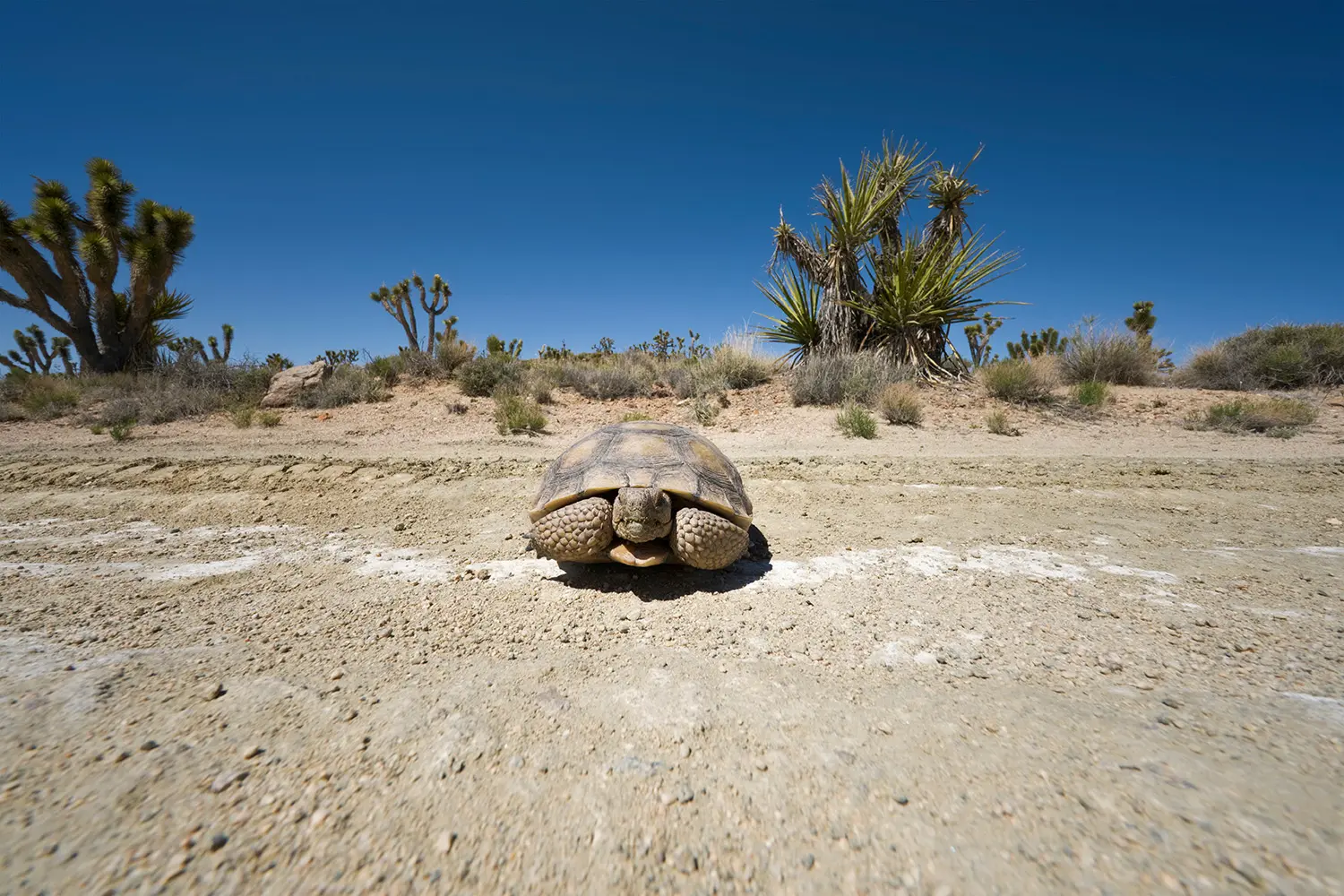
Southern California needs water, and Cadiz Inc. says it has found some beneath its land in the Mojave Desert. The company wants to pump groundwater, move it through pipelines and sell it to water providers across the region. On the surface, that sounds like another way to make our water supply more reliable.
Look closer, though, and Cadiz starts to look like a very expensive 50-year gamble.
Cadiz has permits allowing an average of 50,000 acre-feet of groundwater to be pumped each year, up to 2.5 million acre-feet over 50 years. An acre-foot is about 326,000 gallons, so we are talking about as much as 16 billion gallons a year.
Cadiz argues that much of this groundwater would eventually flow toward dry lakes and evaporate, so pumping it first amounts to “conserving” water. The problem is that groundwater in a desert is not simply wasted because humans do not capture it. It is part of a larger natural system, and scientists have disagreed over how that system works and how connected some desert springs are to the groundwater Cadiz plans to pump. A 2025 peer-reviewed study found evidence against a connection between Cadiz wells and Bonanza Spring, while other researchers have challenged that conclusion.
That uncertainty matters because groundwater moves slowly. If assumptions turn out to be wrong, we may not discover the consequences until years after pumping begins.
Congress understood the need for caution when it passed the California Desert Protection Act in 1994. The law described the California desert as a “cohesive unit” with extraordinary value for current and future generations. It created Mojave National Preserve and expanded protections across millions of acres.
We protected the desert above ground. Cadiz raises a harder question about the water underneath it.
Then there is the money.
Cadiz once estimated that completing its groundwater-bank infrastructure would cost about $800 million. Its latest estimate for the full project has risen to about $1.5 billion, while the Northern Pipeline portion alone is currently budgeted at about $403 million.
Cadiz is not planning to finance all of that with its own money. In May, the company said its revised financing assumptions call for roughly 30% equity and 70% public financing resources, including municipal debt, federal loan programs and government grants. Cadiz has also been invited to apply for up to $194 million in low-interest federal WIFIA financing.
A government loan is not the same thing as a taxpayer giveaway, and municipal debt is not the same as a grant. But public financing matters because it can make capital much cheaper. It also raises a basic question: if this is such a good private water investment, why should public financing play such a large role in making the numbers work?
The commitments do not end when construction is finished. Cadiz has agreements covering 21,275 acre-feet of Northern Pipeline water each year. Earlier company filings described these as 40-year “take or pay” arrangements. More recent filings use the term “take on delivery” and contemplate terms of up to 50 years, with participating providers also paying operating and capital costs.
Those decisions can outlive the people making them.
That is where Cadiz becomes an environmental justice issue. Higher water costs hurt a wealthy household differently than a family already struggling with rent, groceries or medication. Renters may feel water costs indirectly through housing expenses. Seniors live on fixed incomes. Tribal communities have cultural connections to desert water and landscapes that cannot be reduced to a price per acre-foot.
And then there are people who have not even been born yet.
A child born ten years from now could inherit water commitments negotiated today. They will not have attended the public meetings, reviewed the contracts or voted for the officials who approved them, but they could still inherit the bills and whatever happens to the aquifer.
Cadiz says its project will provide reliable water, help underserved communities and store water for droughts. Those are real needs. But that does not make every project promising more water a good solution.
The question is not Cadiz or no water. California can also spend money on recycling wastewater, capturing stormwater, repairing leaks, cleaning polluted groundwater, conserving water and recharging local aquifers.
The real question is whether we should spend billions building another system to move water out of the desert while committing communities to decades of costs and environmental uncertainty.
California has made big water bets before. Cadiz asks future generations to make another one, except they do not get to place the bet. They just get to inherit it.
- Cadiz Inc., SEC Form 10-Q, March 31, 2026 — project water rights, contracted supply, pricing and long-term agreements.
- Cadiz Inc., 2025 Annual Report / SEC Form 10-K — project costs, financing and company disclosures.
- Cadiz Inc., May 2026 Shareholder Letter — revised 30% equity / 70% public-financing assumption and WIFIA financing.
- Cadiz Inc., SEC Form 8-K, August 2026 — approximately $403.3 million Northern Pipeline construction budget.
- Cadiz Inc., SEC Form 10-Q, September 30, 2024 — Northern Pipeline agreements described as 40-year “take or pay” arrangements.
- California Desert Protection Act of 1994, Public Law 103-433 — congressional findings concerning the California desert and its protection for current and future generations.
- Hydrogeology Journal, 2025 — Study of Bonanza Spring and Cadiz-area Groundwater — peer-reviewed research examining the proposed hydrologic connection between Bonanza Spring and the Cadiz groundwater system.
10/05/2026 – This article has been written by the FalseSolutions.Org team
Share this