
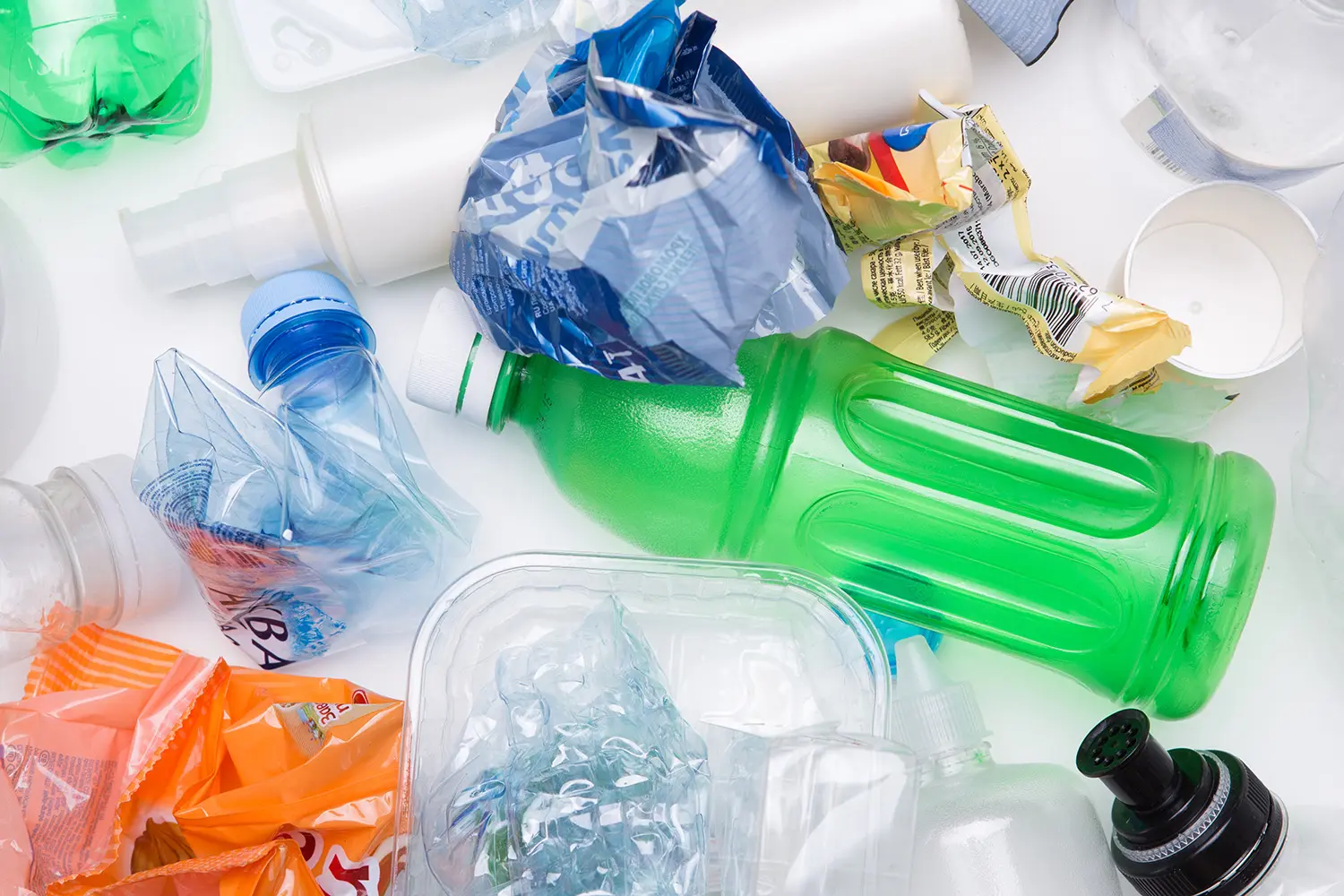
For decades, the deal around plastic packaging has been remarkably good for the companies that make and sell it. They can wrap a product in plastic, sell it to you, and almost immediately make the empty package someone else’s problem. You pay a trash bill to get rid of it. Cities pay to collect litter. Recycling programs struggle to sort it. Landfills take what cannot be recycled, while plastic that escapes the system can end up along roads, in rivers and eventually in the ocean.
California decided to change that arrangement, and now some packaging industry groups want to change it back.
In 2022, California passed Senate Bill 54, the Plastic Pollution Prevention and Packaging Producer Responsibility Act. The name is a mouthful, but the idea behind it is fairly simple: companies that create packaging should remain responsible for some of the costs after that packaging becomes waste.
This concept is called extended producer responsibility. Instead of making the public responsible for a product the moment it enters the trash can, responsibility extends back to the companies putting those materials into the marketplace.
Under California’s rules, producers must reduce single-use plastic packaging and food service ware by 25% by 2032. By then, covered packaging must be recyclable or compostable, and 65% of single-use plastic packaging and food service ware must actually be recycled. Producers must also contribute $5 billion over ten years to address environmental damage caused by plastic pollution, including impacts on communities that have carried a disproportionate share of that pollution.
The regulations implementing SB 54 finally took effect in May. That is when an environmental promise began turning into an actual bill.
A Los Angeles Times investigation published September 10 shows what happened next. Internal documents obtained by the newspaper describe how the Print Creative Alliance, which represents businesses connected to printing, packaging and labels, sought to fight SB 54 and another California recycling law. Its president, Lou Caron, is also a board member of Californians for Affordable Packaging, a group that pushed lawmakers this summer to pause or repeal SB 54.
The leaked documents are revealing because they show how the political argument was being constructed. According to the Times, an internal strategy sought to capitalize on public concern about California’s high cost of living. The campaign promoted an industry-commissioned study estimating that the law could cost an average household about $1,000 a year and identified politically vulnerable lawmakers who might respond to an affordability message.
Caron confirmed the documents were authentic, while arguing that his members do not oppose producer responsibility itself but believe California’s law is unworkable.
Companies have every right to criticize regulations that affect them, and California should certainly pay attention to unintended costs. But there is a giant hole in the affordability argument: plastic waste already costs us money.
Trash collection is not free. Recycling is not free. Cleaning litter is not free. Building and operating waste infrastructure is not free. When those costs appear on a municipal budget or a household trash bill instead of a company’s balance sheet, they do not magically disappear.
SB 54 changes who is responsible for more of that bill.
There is another reason this fight deserves attention. When SB 54 passed in 2022, major business interests, including the California Chamber of Commerce and groups representing plastic producers, supported the compromise. At the time, environmental groups were preparing a tougher plastics ballot initiative. That initiative was withdrawn after lawmakers approved SB 54.
Some environmental advocates warned that industry could accept the compromise, avoid the ballot measure and then fight the law later when its requirements became real. Four years later, at least some packaging interests are doing exactly that. It is worth noting that the current campaign does not represent every company or trade association that supported SB 54 in 2022, but the pattern is difficult to ignore.
The fight also extends to SB 343, California’s “Truth in Recycling” law. That law addresses one of the most persistent problems with plastic recycling: the recycling symbol itself.
For years, consumers have seen the familiar chasing arrows on plastic products and reasonably assumed those products could be recycled. In reality, putting something into a blue bin does not mean there is a functioning system to turn it into another product.
SB 343 establishes standards for when products can be marketed as recyclable. In simple terms, if companies want to tell Californians that something can be recycled, the material generally needs to be collected and processed for recycling in California.
That seemingly straightforward requirement has also ended up in court. In July, a federal judge temporarily blocked enforcement of SB 343 while litigation brought by industry groups continues.
Taken together, these battles reveal something bigger than a disagreement over two California laws. For decades, Americans were taught that plastic pollution was largely a consumer problem. Buy the product, look for the arrows, put the container in the correct bin and hope somebody somewhere turns it into something useful.
That system placed enormous responsibility on the person standing over the recycling bin while asking much less of the company that decided to make the disposable package in the first place.
California is trying to move responsibility in the opposite direction. Reduce unnecessary plastic before it exists, make recycling claims more truthful and require producers to help pay for the waste they create.
The plastic did not suddenly become expensive because California passed a law. It was expensive all along.
The real argument is about who gets stuck with the bill.
- Los Angeles Times, Sept. 10, 2026:
“Leaked emails reveal industry plan to kill California’s plastic and recycling laws.”
Read the Los Angeles Times investigation - California Department of Resources Recycling and Recovery (CalRecycle):
SB 54, Plastic Pollution Prevention and Packaging Producer Responsibility Act.
SB 54 program information - CalRecycle:
California’s 2026 regulations implementing SB 54, including the 2032 source-reduction, recyclability and recycling requirements.
California approves new plastic and packaging rules - CalRecycle:
SB 343, Accurate Recycling Labels, including California’s standards governing use of the chasing-arrows symbol and the July 2026 preliminary injunction.
SB 343 Accurate Recycling Labels
09/13/2026 – This article has been written by the FalseSolutions.Org team
Share this