
We don’t need to change how everyone lives. We need to change the systems that determine how everyone can live.
We live in a world where a broken power line can leave entire neighborhoods without electricity, a drought thousands of miles away can raise food prices, and a disruption in global shipping can make everyday products difficult to find. Modern society has become remarkably good at moving energy, food, and materials around the planet, but we have also become increasingly dependent on systems that are largely beyond our control.
Climate change is exposing the weakness of this arrangement. As extreme weather disrupts power grids, transportation, and food production, communities that depend entirely on distant resources face growing risks. Yet some of the most useful lessons about resilience come from places that, by necessity or choice, learned to rely more on themselves.
The answer isn’t to abandon globalization or return to a simpler past. It’s to build communities that can meet more of their own needs while remaining connected to the wider world.
What Necessity Can Teach Us
Cuba offers a revealing example. Decades of trade restrictions, economic hardship, and dependence on imported fuel have left the country struggling with electricity shortages. In response, Cuba has rapidly expanded solar power, using sunlight to generate electricity that would otherwise require scarce fuel. Solar cannot solve the country’s problems overnight, especially without sufficient battery storage and a reliable grid, but it can reduce dependence on imported energy.
In India’s mountainous state of Sikkim, a different approach emerged. Government policies gradually moved agriculture away from synthetic fertilizers and pesticides, and in 2016 Sikkim became India’s first fully organic state. Organic farming does not guarantee higher yields or complete food independence, but the transition shows how public policy can change an entire agricultural system rather than expecting individual farmers to act alone.
Japan offers an older lesson. During the Edo period, from 1603 to 1867, the country maintained strict limits on foreign trade. With fewer imported resources available, repairing, reusing, and recycling became part of everyday life. Clothing was repaired and remade, materials were recovered, and forests were carefully managed. These practices were not always driven by environmental ideals. They were practical responses to limited resources.
Bangladesh provides another example through floating gardens, where farmers grow vegetables on beds made from water plants in areas prone to flooding. Instead of relying entirely on expensive engineering to keep water away, communities developed ways to continue farming with the water around them.
None of these societies should be romanticized. Cuba continues to suffer severe shortages, Sikkim’s agricultural transition has faced challenges, and historical Japan experienced famines. But they demonstrate something important: when communities develop local knowledge and control over essential resources, they can reduce certain vulnerabilities.
Modern Comfort Without Constant Dependence
Learning from these examples does not mean returning to the conditions that created them.
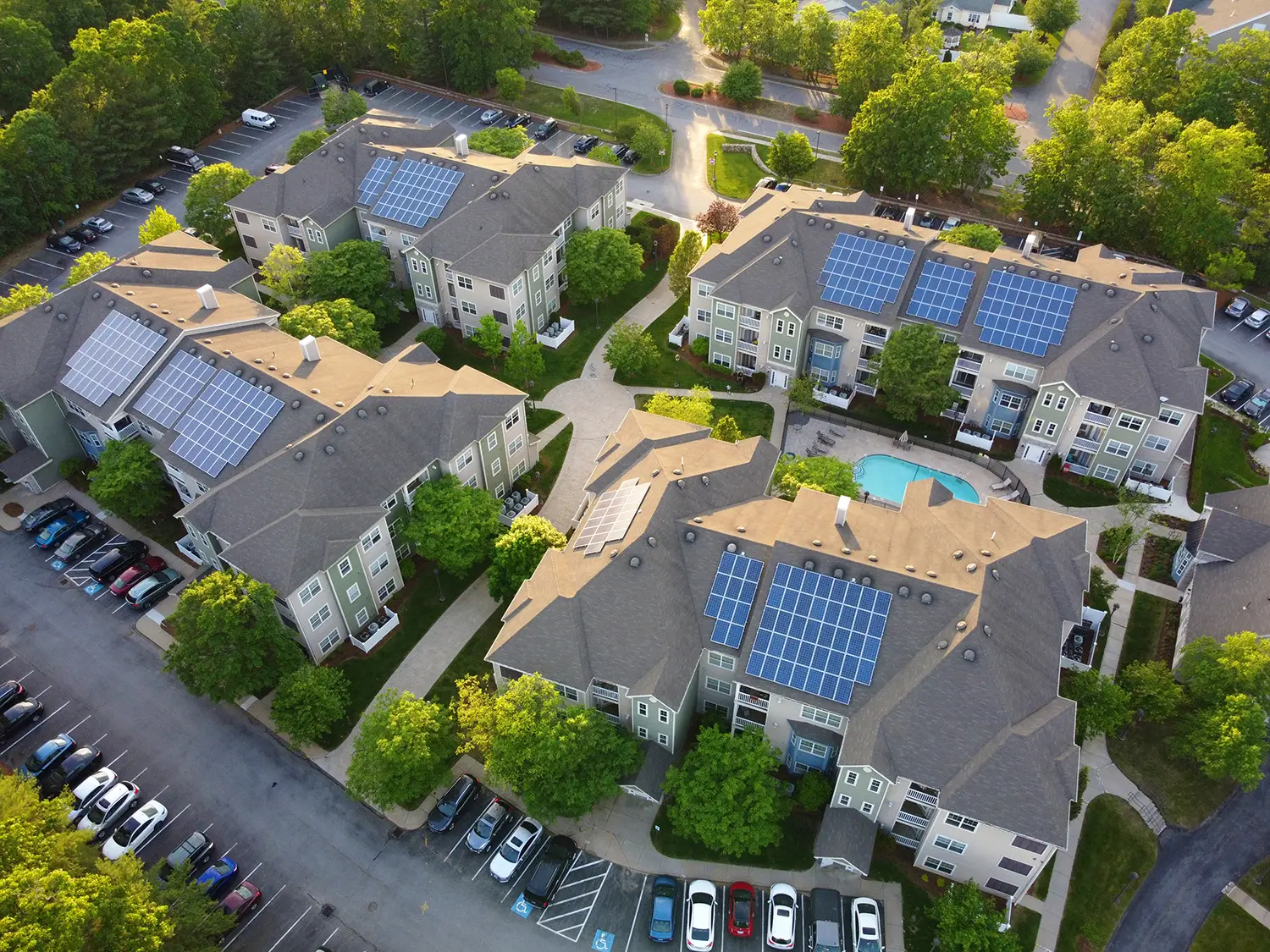
Imagine a modern home with rooftop solar panels, batteries that provide backup electricity, efficient electric heating and cooling, and a system that collects rainwater for irrigation. It still has air conditioning, hot showers, refrigeration, internet access, and modern appliances. An electric vehicle can charge at home, and energy-efficient equipment can lower utility bills.
Such a home can use fewer resources and remain functional during some power outages, provided its electrical system is designed to operate independently when needed. It does not have to disconnect from the grid or abandon the conveniences of modern life.
Now imagine extending that approach to an entire neighborhood. Schools and community centers could have solar panels and batteries to provide essential services during emergencies. Shared energy systems, known as microgrids, could keep selected buildings powered when the larger electrical network fails. Water conservation, local food production, and repair services could reduce dependence on distant suppliers.
These measures would not eliminate the need for major infrastructure, but they could make communities less vulnerable when that infrastructure fails.
Making Sustainability Easy Should Be a Public Responsibility
There is a problem with how we usually talk about environmental responsibility. People are told to install solar panels, buy electric cars, replace gas appliances, conserve water, and purchase sustainable products, as though fixing our environmental problems were simply a matter of making better personal choices.
But these choices often require money, technical knowledge, permits, and time. Renters may have little control over their buildings, while homeowners can face complicated approval processes and high upfront costs.
Governments and community leaders can change that. They can simplify permits, support community-owned energy, invest in shared backup power, expand water-saving infrastructure, and make efficient buildings more affordable. Public investment can bring these benefits to entire neighborhoods rather than only those who can afford them.
We already build roads, water systems, and electrical networks as shared infrastructure. Climate resilience deserves the same approach. Living sustainably should be the easiest and most affordable option, not a privilege reserved for people with enough money to navigate the obstacles.
Who Controls the Systems We Depend On?
There is another benefit to local resilience that receives less attention: it can reduce the power that large corporations hold over essential parts of our lives.
When electricity comes from a handful of large utilities, food depends on distant suppliers, and everyday products cannot be repaired, consumers have limited alternatives. Community-owned energy, local repair businesses, water reuse, and more diverse food systems can give people greater control.
This does not mean large infrastructure or international trade is unnecessary. Hospitals, transportation networks, manufacturing, and modern communications depend on systems that extend far beyond individual communities. The question is whether everything must depend on those systems all the time.
Governments routinely consider expensive power plants, pipelines, and other major projects. They should also examine whether smaller, distributed investments could meet some of the same needs, reduce environmental damage, and leave communities with more control.
A Different Kind of Progress
A resilient society is not one that isolates itself from the world. It is one that can handle disruptions without losing access to the essentials of modern life. It uses global knowledge and technology while producing more energy locally, conserving resources, protecting water supplies, and reducing unnecessary waste.
The lessons from Cuba, Sikkim, Japan, and Bangladesh are not invitations to embrace hardship. They show that communities can develop practical alternatives when circumstances demand them. Today, we have the opportunity to make those choices deliberately, using technology and public investment rather than waiting for a crisis.
We don’t need to change how everyone lives. We need to change the systems that determine how everyone can live.
A better future should offer the comforts of modern society without requiring endless resource consumption or complete dependence on distant corporations and fragile infrastructure. The goal is not to disconnect from the world, but to become locally capable while remaining globally connected.
- Reuters (2026) – Cubans fight blackouts with solar as US extends oil chokehold
- The Japan Times – Edo Period lessons on a truly circular economy
- Japan Ministry of Economy, Trade and Industry – Learn what just enough is: The sustainable living of the Edo period
- UN Food and Agriculture Organization – Floating Garden Agricultural Practices, Bangladesh
- U.S. Department of Energy – Solar Integration: Distributed Energy Resources and Microgrids Basics
- U.S. Department of Energy – Solar and Resilience Basics
10/20/2026 – This article has been written by the FalseSolutions.Org team
Share this