
California’s almond industry shows how modern agriculture has become dependent on replacing natural services that healthy ecosystems once provided.
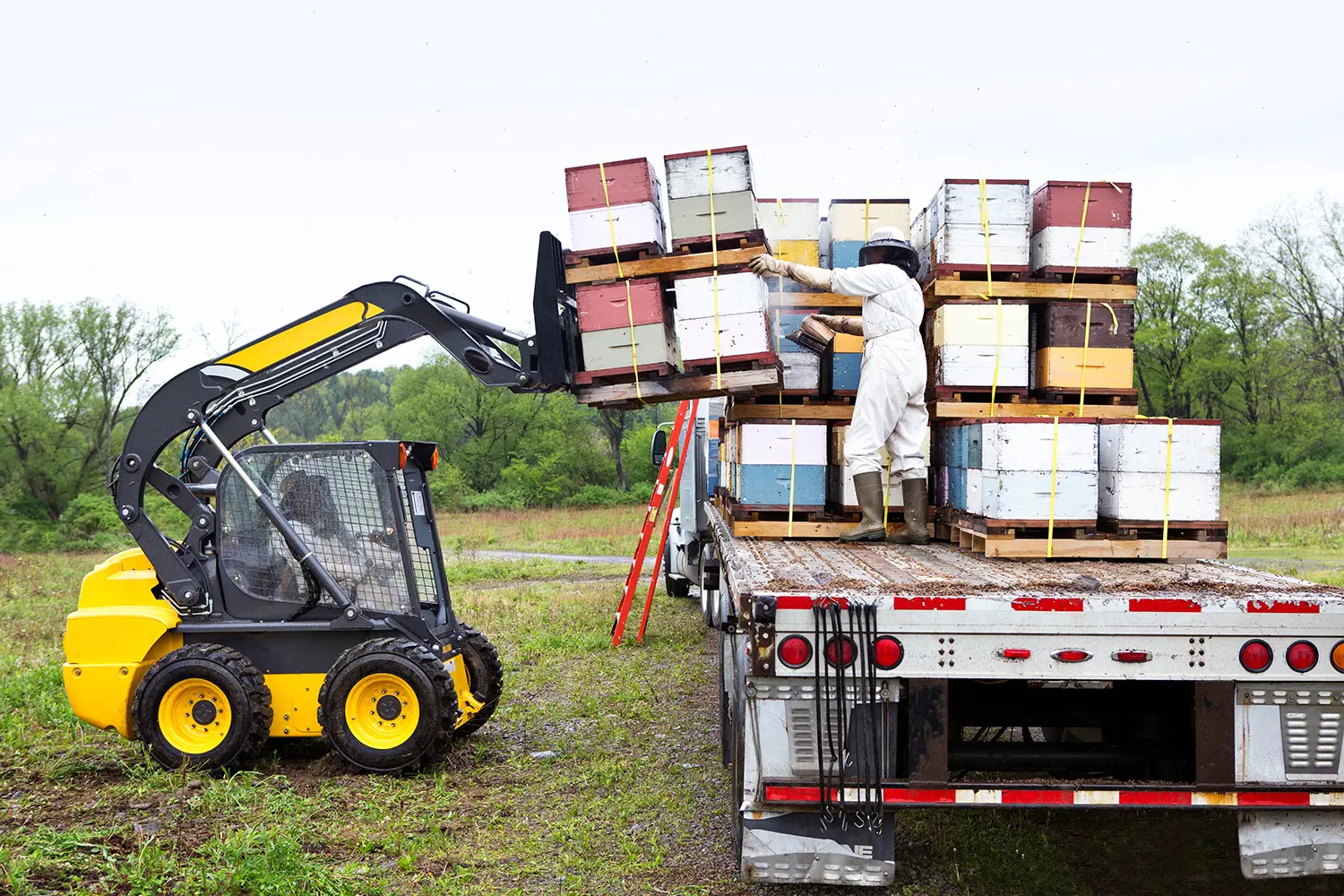
Every February, trucks carrying millions of honeybee colonies arrive in California’s Central Valley. Beekeepers bring them from across the country to pollinate almond orchards, where billions of flowers bloom for just a few weeks. Once the blossoms disappear, many of the bees are loaded onto trucks again and moved to other farms.
This annual migration is one of the largest organized pollination efforts in the world. It is also a striking example of how modern agriculture works: we have created enormous farms that depend on insects while removing much of the natural habitat those insects need to survive.
Instead of rebuilding healthy ecosystems, we have developed an industry that transports pollinators wherever they are needed.
An Industry Built Around Imported Bees
California produces roughly 80% of the world’s almonds. Its orchards cover about 1.4 million acres, an area larger than the state of Delaware.
Most traditional almond varieties cannot produce a full crop using their own pollen. They need pollen from another compatible almond variety, carried from flower to flower by bees.
In 2026, California’s almond growers needed an estimated 2.29 million managed honeybee colonies to pollinate their trees. Each healthy colony can contain tens of thousands of bees.
This arrangement has become so important that almond pollination is now a major source of income for American commercial beekeepers. Many earn more from renting their colonies to farmers than from selling honey.
The system works, but it comes with costs that extend beyond the price of renting bees.
When Farmland Becomes a Food Desert
An almond orchard provides an enormous amount of nectar and pollen during its short flowering season. For bees, however, a few weeks of abundant food cannot replace the variety of flowering plants they need throughout the year.
Large areas of farmland planted with a single crop are called monocultures. They make planting, harvesting, and managing crops more efficient, but they can also reduce the variety of plants and animals living in the surrounding landscape.
Wild bees need more than almond blossoms. Many depend on native flowers, undisturbed soil for nesting, and suitable habitat throughout their lives.
Pesticides add another problem. Some chemicals used to control agricultural pests can also harm bees, affecting their survival, navigation, or ability to reproduce.
Transporting large numbers of managed colonies into the same agricultural region can also increase opportunities for diseases and parasites to spread.
These pressures do not mean almond farming alone is responsible for declining pollinator populations. They do show how intensive agriculture can make life harder for the insects it depends on.
Saving Honeybees Is Not the Same as Saving Pollinators
There is another important distinction that often gets lost in campaigns to save the bees.
The European honeybee is a managed species in the United States. Beekeepers raise colonies, treat diseases, provide supplemental food, and replace lost colonies when possible.
Wild bees are different. The United States has roughly 4,000 native bee species, including bumblebees, mining bees, and leafcutter bees. Many live alone rather than in large colonies, and they cannot simply be replaced by ordering more hives.
Other insects, including butterflies, moths, flies, and beetles, also pollinate plants.
Commercial honeybees are essential to many farms, but increasing their numbers does not automatically protect wild pollinators. In some places, large numbers of managed honeybees may even compete with native species for limited food.
A farm can have thousands of imported honeybee colonies during spring and still provide poor habitat for wild pollinators during the rest of the year.
Fixing the System, Not Just the Symptoms
Some almond growers are already changing their practices. They plant flowering cover crops between orchard rows, restore native plants along field edges, and reduce pesticide risks.
New self-fertile almond varieties can also reduce dependence on imported bees because they do not require pollen from another almond variety. Bees can still improve their yields, but fewer colonies may be needed.
These are useful improvements, although they do not solve every problem. Self-fertile trees do not restore lost wildlife habitat, and managed honeybees cannot replace the thousands of native pollinator species that support healthy ecosystems.
The real opportunity is to make farmland more welcoming to nature instead of treating nature as something that must be brought in by truck.
California’s almond industry demonstrates a larger problem with modern agriculture. We measure success by how much food we produce and how efficiently we produce it, while often overlooking the environmental systems that make production possible.
The question is not whether we can keep finding ways to replace nature’s services. It is why we continue making those services harder for nature to provide.
- USDA Economic Research Service. Fruit and Tree Nuts Outlook, 2026. USDA Economic Research Service
- USDA National Agricultural Statistics Service. California Almond Acreage Reports, 2026. USDA NASS
- Almond Board of California. Pollinator Health and Bee-Friendly Farming. Almond Board of California
- Xerces Society for Invertebrate Conservation. Pollinator Conservation Resources. Xerces Society
- Nature Sustainability. Research on pesticide use and wild bee populations, 2024. Read the study
11/13/2026 – This article has been written by the FalseSolutions.Org team
Share this