
America’s energy industry has a familiar answer to growing electricity demand: build more power plants, pipelines, and transmission lines. With artificial intelligence driving plans for enormous data centers, utilities are preparing to spend billions on new infrastructure, including natural gas plants and nuclear reactors. Much of that investment could eventually appear on customers’ electricity bills.
But a different approach is gaining ground across the country. Instead of waiting for utilities to build more infrastructure, households are beginning to get something they have rarely had before: a simple, affordable way to produce some of their own electricity.
A Solar Panel You Can Plug Into the Wall
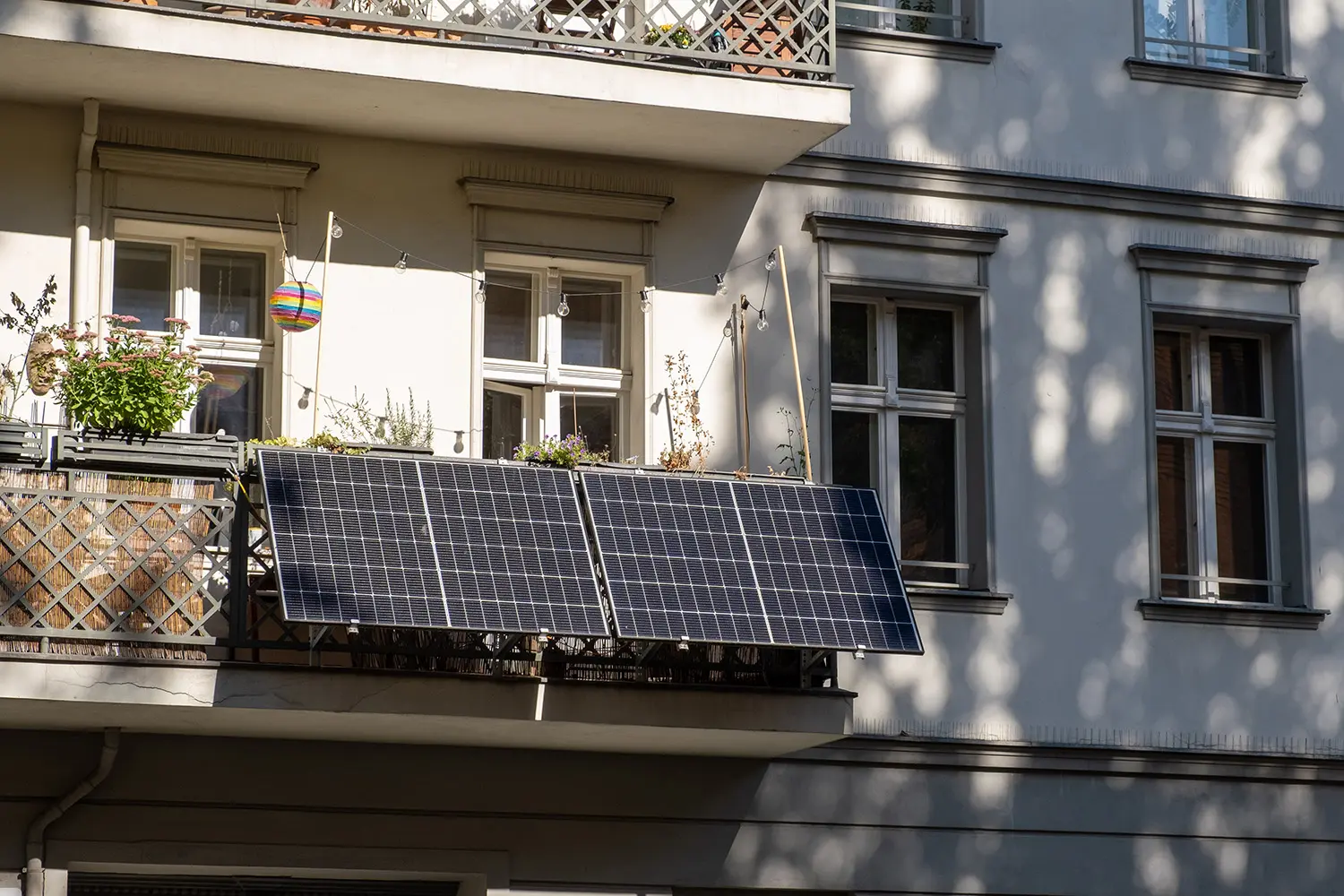
Plug-in solar, also called balcony solar, is remarkably simple. Small solar panels connect to an inverter, a device that converts sunlight into electricity a home can use. Unlike traditional rooftop solar, these systems are designed to work without expensive installation projects.
They won’t power an entire house, but they can reduce the electricity purchased from the utility during sunny hours. For renters, apartment residents, and homeowners who cannot afford rooftop solar, that opens a door that has largely remained closed.
Utah became the first state to pass legislation supporting plug-in solar in 2025. California, Colorado, Vermont, and several other states followed in 2026. By October, ten states had enacted laws making it easier to use these small systems, although their rules and implementation dates differ.
California’s new Plug and Play Solar Act, SB 868, will allow qualifying systems producing up to 1,200 watts to operate without the traditional utility approval process beginning in 2027.
That might sound insignificant compared with a nuclear reactor producing more than a billion watts. But the comparison misses something important: small systems can add up without requiring one enormous construction project.
Germany Shows What Happens When People Get a Choice
Germany has already demonstrated the potential. After simplifying rules for balcony solar, the country registered approximately 430,000 new plug-in systems in 2025 alone, adding around 500 megawatts of solar capacity.
Imagine one million California households installing 800-watt systems. Together, they would represent 800 megawatts of generating capacity. Actual electricity production would depend on sunlight, location, and equipment, but the combined output could meaningfully reduce daytime demand.
Plug-in solar cannot replace electricity needed at night, and its ability to reduce peak demand is limited without batteries. Still, electricity generated at home is electricity that doesn’t need to be produced somewhere else at that moment.
Why Build a Gas Pipeline Nobody Wants?
California recently passed another law that follows the same logic.
Under AB 2313, households scheduled for certain gas service line replacements will have an opportunity to receive financial assistance to switch to electric appliances instead.
The law addresses an expensive contradiction. California encourages residents to move away from natural gas, yet utilities continue replacing aging gas lines that customers may no longer need.
In PG&E’s territory, replacing a residential gas service line can cost $20,000 to $30,000. Those costs are generally recovered through gas rates, meaning other customers help pay for infrastructure that may remain in place for decades.
Helping a household switch to electricity could cost less than installing another gas line. Avoiding that investment could benefit everyone paying into the gas system.
The Business of Building More
This brings us to an uncomfortable question about how utilities make money.
Investor-owned utilities generally recover approved infrastructure costs through customer rates and can earn regulated returns on certain investments. Building new infrastructure can therefore create opportunities for earnings, while helping customers use less energy does not necessarily offer the same financial reward.
That doesn’t mean every new power plant is unnecessary. Nuclear power provides reliable, low-carbon electricity, and large renewable energy projects remain essential. But new nuclear reactors can take years to build and require enormous upfront investments, while gas infrastructure can lock customers into decades of fossil fuel dependence.
Meanwhile, millions of smaller investments could reduce demand, improve efficiency, and help avoid some future construction.
The difference is who makes the decisions, who controls the equipment, and who carries the financial risk.
The Power Plant We Never Had to Build
America’s solar industry is growing rapidly, but most attention still goes to enormous projects. Plug-in solar offers a different possibility, one where households become part of the energy system rather than simply paying for it.
A few panels on a balcony won’t replace a nuclear reactor. But millions of panels, combined with energy-efficient buildings, batteries, and smarter electricity use, could reduce the need for some expensive new infrastructure.
California’s new laws suggest that avoiding unnecessary construction can be just as valuable as building something new.
Before committing billions to the next generation of power plants and pipelines, perhaps we should ask how much of that infrastructure we could avoid needing in the first place.
- California SB 868 — Plug and Play Solar Act (2026). Legislation establishing exemptions for qualifying portable solar devices.
- California AB 2313 — Home Energy Choice Act (2026). Legislation creating alternatives to certain residential gas line replacements.
- Southern Alliance for Clean Energy — Plug-In Solar Policy Report (2026). Analysis of plug-in solar legislation, safety, and adoption in the United States.
- Germany’s Federal Network Agency — Solar Expansion in 2025. Official statistics on balcony solar installations and generating capacity.
- California Assemblymember Marc Berman — Governor Signs Home Energy Choice Act (September 2026). Explanation of AB 2313 and its intended benefits.
- U.S. Plug-In Solar Legislation Tracker (2026). Overview of enacted and pending state legislation.
10/25/2026 – This article has been written by the FalseSolutions.Org team
Share this