
For decades, Americans were encouraged to think about environmental problems as something happening somewhere else. Melting glaciers were in the Arctic. Deforestation was happening in the Amazon. Plastic was floating somewhere in the Pacific Ocean. Climate change was something future generations would eventually have to deal with.
That separation is becoming harder to maintain.
Today, environmental problems show up in remarkably ordinary places: the grocery bill, the electric bill, the cost of homeowners insurance, the smoke outside a child’s school, the water coming from the kitchen faucet, and the temperature inside an apartment during a heat wave. What looks like a collection of separate environmental problems is increasingly becoming one connected problem affecting our health, our homes, and the cost of everyday life.
Extreme weather is becoming part of ordinary life
Climate change does not create every hurricane, wildfire, drought, flood or heat wave, but a warmer atmosphere can make many extreme events more intense or more likely. The result is something Americans are increasingly experiencing firsthand.
The numbers tell part of the story. Between 1980 and 2024, the United States experienced 403 weather and climate disasters that caused at least $1 billion in damage each. During the five years from 2020 through 2024, the average reached 23 billion-dollar disasters per year. NOAA tracks these major weather and climate disasters.
Those billions eventually become personal. A damaged electrical grid can mean higher utility costs. A flooded highway disrupts someone’s commute. A hurricane can close businesses for weeks. Wildfire risk can affect whether homeowners can obtain affordable insurance.
Extreme heat may be the clearest example because it reaches directly into daily routines. The Environmental Protection Agency warns that rising temperatures can affect schools, workplaces and homes while increasing the amount families spend cooling their houses. Outdoor workers can also lose working hours and income when temperatures become unsafe. The EPA explains the growing risks from extreme heat.
The air outside is becoming harder to ignore
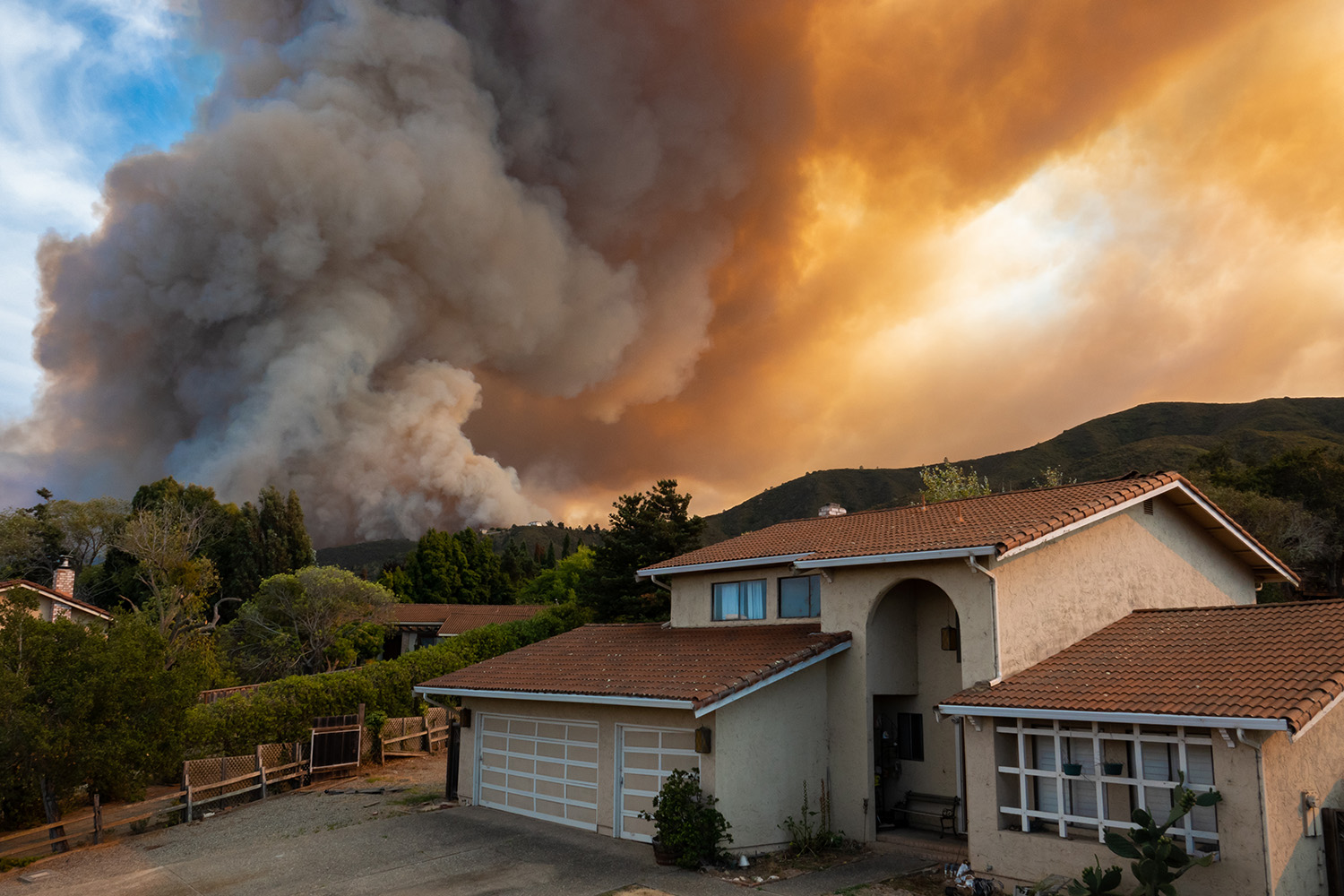
Air pollution is hardly a new American problem. Cars, trucks, factories, ports, power plants and fossil fuel production have polluted communities for generations. Climate change is now adding another increasingly familiar source: wildfire smoke.
Smoke does not respect state lines. The EPA notes that wildfire smoke can travel hundreds or even thousands of miles, exposing communities far from the actual fire. Fine particles in that smoke can enter the lungs and are associated with respiratory and cardiovascular problems. EPA research details the health effects of wildfire smoke.
This changes what summer looks like. Checking the Air Quality Index can become as normal as checking the weather. Children may stay indoors for recess. People postpone outdoor exercise. Families buy air filters or keep windows closed during hot weather when they would rather let fresh air inside.
Air pollution has become something we manage inside our homes because the outside air is not always safe.
Water problems are about more than drought
Water shortages are often pictured as cracked desert soil or a shrinking reservoir, but America’s water problem is much broader. Groundwater is being depleted in some regions while communities elsewhere struggle with aging pipes, agricultural pollution, industrial chemicals, lead and PFAS.
PFAS are sometimes called “forever chemicals” because many of them break down extremely slowly. They have been used in a wide range of products and can eventually reach soil and water.
The result is an uncomfortable question that more Americans are asking: What exactly is coming out of my faucet?
Water also connects directly to food. Farms need enormous amounts of it, which means drought, groundwater depletion and changing rainfall patterns can eventually affect what is available at the supermarket and what it costs.
The grocery store is connected to the soil
Modern American agriculture is remarkably productive, but productive land cannot simply be taken for granted. Healthy soil is a living ecosystem filled with bacteria, fungi and other organisms. It stores nutrients, absorbs water, supports crops and even helps filter pollutants.
When soil loses organic matter or is repeatedly disturbed and left exposed, it becomes more vulnerable to erosion, drought and flooding. The USDA says healthier soils can absorb and retain more water, helping farms withstand periods that are unusually wet or dry. Practices such as cover crops, reduced tillage and diverse crop rotations can improve those natural functions. USDA’s Natural Resources Conservation Service provides more information about soil health.
This is why regenerative agriculture matters beyond the farm. Rebuilding soil can help protect water, reduce erosion, store carbon and make farms more resilient at the same time. Instead of trying to overpower nature with more inputs, regeneration tries to restore some of the natural systems agriculture depends upon.
Plastic pollution has become personal
Plastic pollution once brought to mind bottles and bags washing onto beaches. Today, the conversation increasingly includes something much smaller.
Microplastics are tiny pieces of plastic, sometimes too small to see. The U.S. Geological Survey has found them throughout the environment and studies them in water, air, sediment and wildlife. Scientists know that human exposure occurs, although major questions remain about what different levels and types of exposure mean for human health. The U.S. Geological Survey provides an overview of microplastics research.
That uncertainty should not be confused with evidence that there is no problem. It means science is still trying to understand the consequences of filling the environment with materials that persist and fragment into smaller and smaller pieces.
Losing nature means losing services we depend on
Biodiversity simply means the variety of living things around us, from plants and animals to insects, fungi and microorganisms. Losing biodiversity may sound less urgent than losing a house to a wildfire, but functioning ecosystems quietly provide services we use every day.
Pollinators help produce food. Wetlands absorb floodwater. Forests store carbon, cool surrounding areas and help regulate water. Healthy soil organisms make nutrients available to plants.
Environmental organizations including Concern Worldwide and Earth.Org have emphasized that biodiversity loss, soil degradation, water problems, pollution and climate change reinforce one another rather than happening independently.
A new energy problem is arriving at the same time
America also faces a newer challenge. Electricity demand is beginning to grow after years of relatively slow growth, driven partly by manufacturing, electrification and the rapid construction of data centers needed for cloud computing and artificial intelligence.
Data centers consumed about 4.4 percent of U.S. electricity in 2023. The Department of Energy estimated that their share could reach roughly 6.7 to 12 percent by 2028. The U.S. Department of Energy has examined this increase in electricity demand.
We need electricity, and technologies such as AI are not inherently the enemy. The real question is how we respond to that demand. If every increase in electricity use becomes an excuse to build more fossil fuel infrastructure, we risk using yesterday’s solution to power tomorrow’s technology.
There are other choices. Renewable energy, battery storage, energy efficiency, distributed solar, virtual power plants and smarter management of electricity demand can provide power without automatically requiring another generation of combustion-based infrastructure.
These are not separate crises
Perhaps the biggest mistake is treating each environmental issue as if it existed by itself. A drought can damage crops, which contributes to higher food prices. Extreme heat increases electricity demand while making outdoor work more dangerous. Wildfires destroy homes and send smoke across the country. Damaged ecosystems make flooding and heat worse, while struggling families have fewer resources to protect themselves from any of it.
The encouraging part is that solutions can also overlap. Healthy soil can store more water and support crops. Trees can cool neighborhoods, provide habitat and absorb carbon. Efficient buildings can lower electricity bills while reducing power demand. Distributed renewable energy and batteries can make the grid cleaner and more resilient.
Environmental policy therefore should not simply ask whether something reduces carbon emissions on paper. We should ask whether it reduces pollution, protects communities, conserves resources and leaves us with a healthier system than the one it replaces.
The environmental crisis is no longer somewhere else, and neither are the solutions. Both are increasingly part of the choices we make about how we grow food, produce electricity, build communities and spend public money. The challenge now is making sure the solutions we choose actually solve the problem instead of simply moving it somewhere else.
- U.S. Environmental Protection Agency: Extreme Heat
- EPA: Research on Health Effects from Air Pollution
- EPA: Wildland Fire Research and Human Health
- NOAA: Billion-Dollar Weather and Climate Disasters
- USDA Natural Resources Conservation Service: Soil Health
- USDA Climate Hubs: Maintain and Improve Soil Health
- U.S. Geological Survey: Microplastics
- U.S. Geological Survey: Integrated Science for the Study of Microplastics
- U.S. Department of Energy: U.S. Data Center Energy Use
- Concern Worldwide: 10 of the Biggest Environmental Issues of 2026
- Earth.Org: 16 Biggest Environmental Problems of 2026
08/11/2026 – This article has been written by the FalseSolutions.Org team
Share this