
Around the world, governments and corporations promise development. They promise jobs, energy, minerals, food and economic growth. Increasingly, they also promise that new projects will help solve climate change.
But there is a question that rarely makes it into the sales pitch: What happens to the people who already live on the land?
In 2025, at least 124 land and environmental defenders were killed while protecting their land, communities and natural resources, according to a new report from Global Witness. Since the organization began tracking these cases in 2012, it has documented 2,375 killings and long-term disappearances. Global Witness warns that the real number is likely higher because many cases are never reported or cannot be independently verified.
These are not mainly professional environmentalists sitting in offices. More than three-quarters of those killed in 2025 were Indigenous people, small-scale farmers or Afro-descendant people. Forty-four were Indigenous. They were people defending the places where they lived, farmed, gathered food and raised their families.
The geography is just as revealing. About 85% of the documented killings happened in Latin America. Colombia recorded 39 deaths and Brazil 26, meaning those two countries alone accounted for more than half of the global total. Honduras and the Philippines each recorded another 12.
Behind many of these deaths is something remarkably ordinary: land.
Land disputes were associated with more than half of the killings documented by Global Witness. Mining and other extractive industries were linked to 11 killings, logging interests to eight and agribusiness to six. More than a third of the killings were linked to organized crime or hired killers.
This is where an environmental story becomes a story about power.
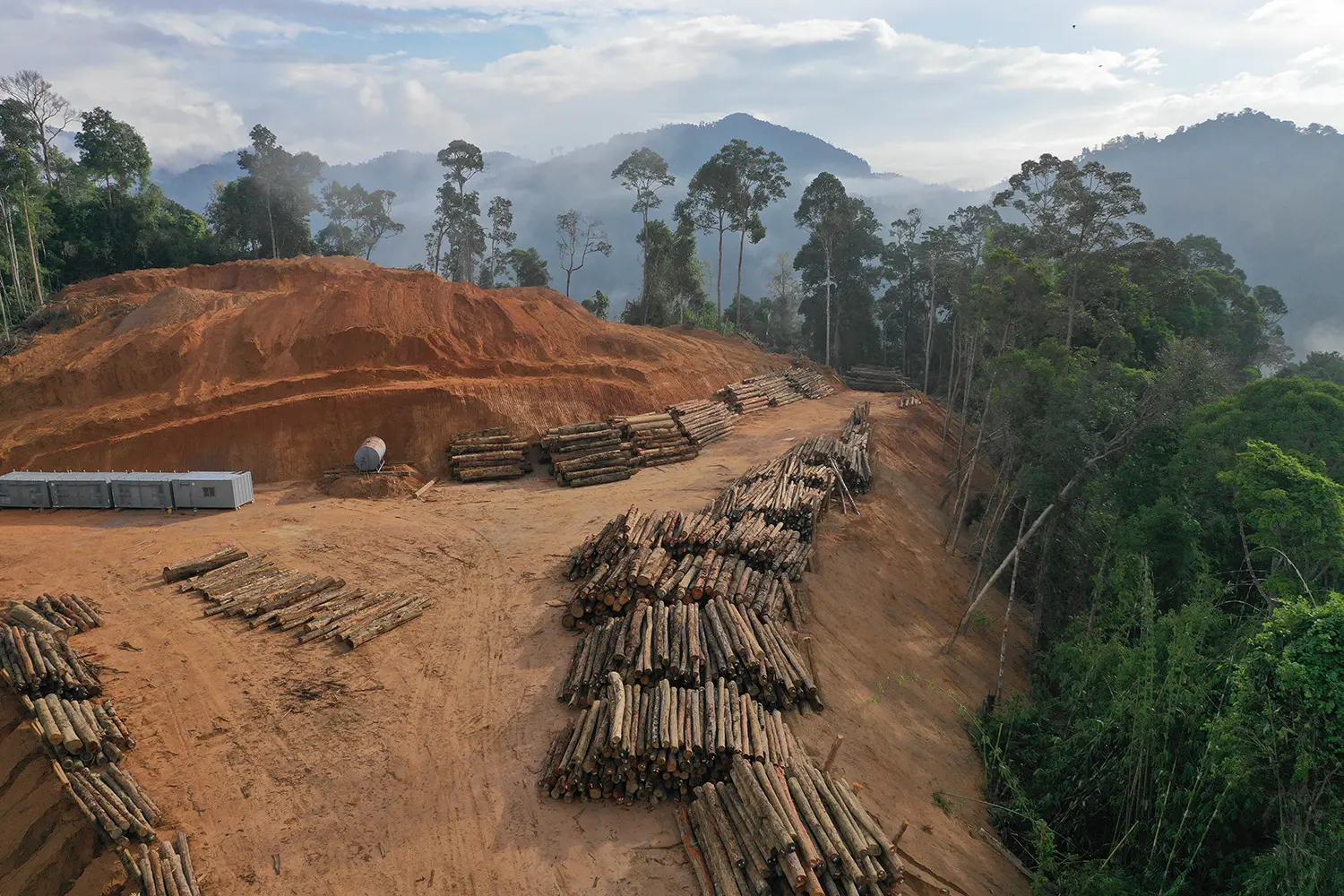
A forest may be a home, a source of water and food, a sacred place and a defense against climate change to the people who live there. To someone else, that same forest may look like timber, farmland or minerals waiting to be sold. Once enough money is involved, the people protecting the land can suddenly be treated as obstacles to progress.
That problem will not automatically disappear as the world moves away from fossil fuels.
Solar panels, electric cars, batteries and power lines require enormous amounts of minerals and land. Those technologies are necessary parts of moving away from fossil fuels, but calling something part of the “green transition” does not erase the damage caused by extracting its raw materials. Global Witness warns that renewable energy and transition-mineral projects can themselves contribute to land grabs, dispossession and violence when communities are excluded from decisions.
There is even a term for this contradiction: green colonialism. It describes a familiar system wearing greener clothes, where resources are taken from one community for the benefit of people somewhere else while those living with the mine, dam, plantation or energy project carry the environmental and social costs.
That does not mean mining is unnecessary or every renewable energy project is harmful. It means the energy transition cannot simply replace oil wells with mines while keeping the same old rules about who gets the benefits and who absorbs the damage.
There is another warning hidden in these numbers. Murder is the most extreme form of silencing people, but it is not the only one. Environmental defenders also face threats, harassment, surveillance, smear campaigns, arrests and criminal charges. Global Witness reports growing criminalization and intimidation of defenders, particularly in Asia.
The people defending forests, rivers and farmland are often described as standing in the way of development.
Perhaps we have that backward.
If development requires taking someone’s land, ignoring the people who live there, destroying the environment they depend on and silencing those who object, the problem is not the people standing in the way.
The problem is what we have chosen to call development.
- Global Witness — Collective Power: The Struggle for Protection for Land and Environmental Defenders
- Global Witness — At Least 124 Land and Environmental Defenders Killed Globally in 2025
- Global Witness — Documenting Killings and Disappearances of Land and Environmental Defenders
- Earth.Org — At Least 124 Land and Environmental Defenders Killed in 2025
- Associated Press — Report on Environmental Defender Killings in 2025
10/07/2026 – This article has been written by the FalseSolutions.Org team
Share this