
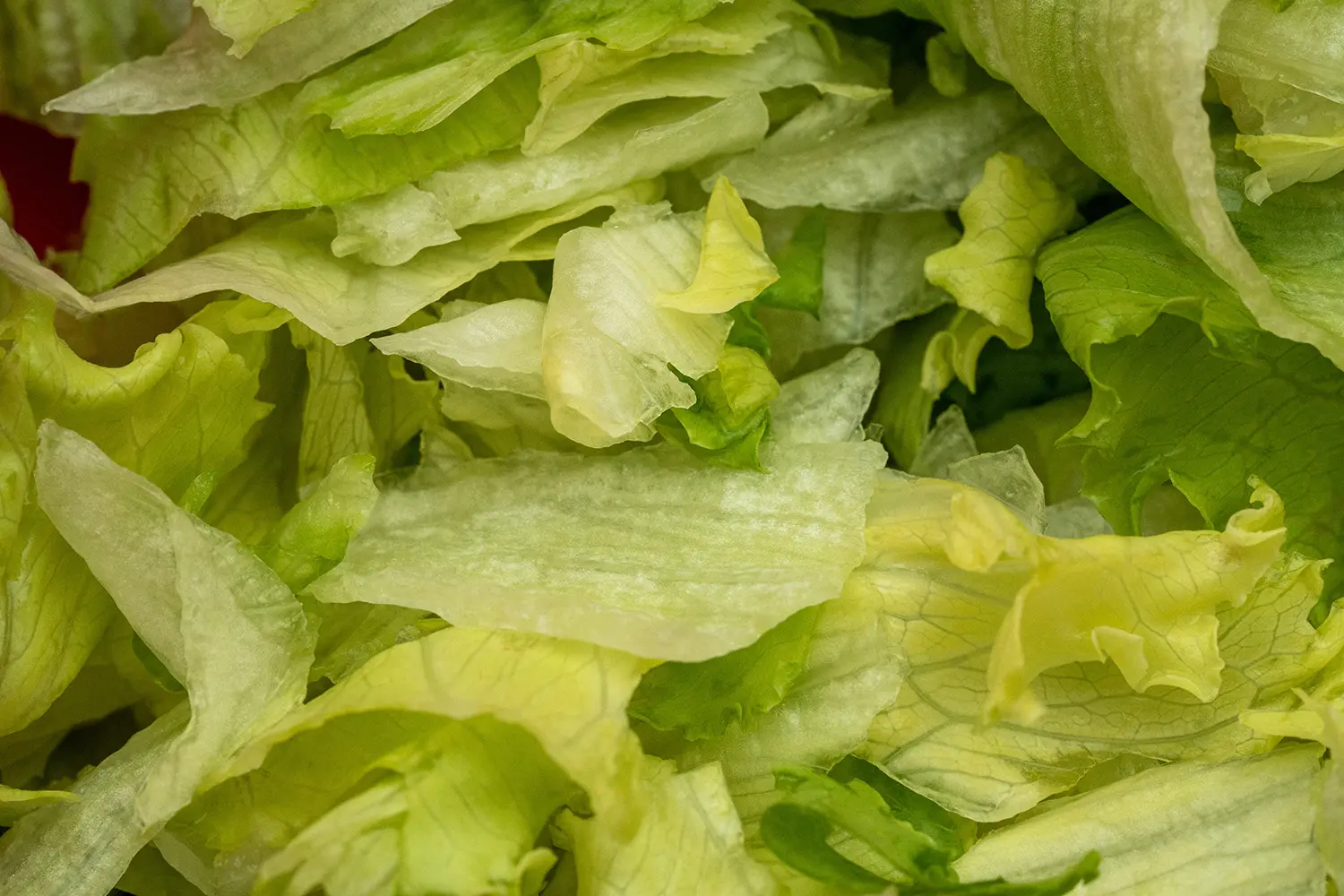
Lettuce does not look particularly dangerous. It is one of the most ordinary foods in an American kitchen, something we toss into a salad, add to a sandwich or pick up from the produce section without much thought. Yet this summer, iceberg lettuce became the center of one of the largest Cyclospora outbreaks ever recorded in the United States, showing how quickly a problem on a farm can travel through our highly connected food system and end up on dinner tables thousands of miles away.
As of August 20, federal investigators had linked 10,930 illnesses in 17 states to the outbreak, with 454 people hospitalized and two deaths reported in Michigan. The investigation traced the outbreak to iceberg lettuce sourced from central Mexico and processed by Taylor Farms de Mexico. The recalled lettuce was distributed widely across the United States and appeared in grocery products as well as restaurants.
The numbers are alarming, but the more interesting question is how one contaminated ingredient can make thousands of people sick across such a large area. The answer reveals something much bigger than a bad crop of lettuce.
Meet the Parasite You Probably Never Heard Of
Cyclospora cayetanensis is a microscopic parasite that infects the human intestine and causes an illness called cyclosporiasis. The most common symptom is prolonged diarrhea, although people can also experience stomach cramps, nausea, fatigue, loss of appetite, fever and weight loss. Symptoms can disappear and then return, sometimes lasting for weeks.
Unlike many foodborne illnesses, Cyclospora has an unusual life cycle. The parasite leaves an infected person through feces, but it does not immediately become infectious. It needs time in the environment before it can infect someone else. That means an outbreak usually points toward contaminated food or water rather than someone simply passing the illness directly to another person.
Fresh produce presents a special challenge because lettuce, berries, herbs and similar foods are often eaten raw. Cooking can destroy many pathogens, but nobody wants their salad cooked. Washing produce helps remove dirt and some contamination, but it cannot guarantee that Cyclospora will disappear.
The safest place to stop the parasite is therefore long before the lettuce reaches your kitchen.
The Incredible Efficiency of Spreading a Problem
Modern food distribution is remarkably efficient. A crop can be harvested in one region, processed at a large facility, shipped through distribution centers and served at restaurants hundreds or thousands of miles away within days. Most of the time, that efficiency gives Americans access to inexpensive produce throughout the year.
When something goes wrong, however, the same system works in reverse.
Federal investigators initially connected illnesses to people who had eaten at Taco Bell restaurants in several states. By July 17, investigators had traced the suspected lettuce to a single supplier, Taylor Farms de Mexico, which voluntarily recalled iceberg lettuce sourced from central Mexico. The recall eventually covered products distributed across dozens of states.
This is one of the contradictions of our industrial food system. The networks that make food cheap, consistent and widely available can also give contamination an interstate highway.
A food safety problem no longer has to remain near the farm where it began. One contaminated crop entering a major processing and distribution network can quickly become everybody’s problem.
Follow the Water
Cyclospora also raises an increasingly important question about water.
The parasite is associated with human fecal contamination, which means keeping contaminated water away from crops is an essential part of prevention. Farmers use enormous amounts of water, and produce that is eaten raw requires particular care because there is no cooking step at the end to provide another layer of protection.
Federal rules recognize this risk. The Food and Drug Administration has updated agricultural water requirements intended to help farms identify conditions that could contaminate produce before harvest.
But water is becoming a more complicated resource.
Across agricultural regions, drought, groundwater depletion and growing competition for freshwater are increasing pressure to find alternative supplies. Treated wastewater can be an important part of that solution, particularly in dry regions, but using it safely requires strong treatment standards, monitoring and infrastructure.
None of this means recycled water caused this outbreak. Federal investigators have not established that, and making that claim would get ahead of the evidence. What the outbreak does demonstrate is why water quality cannot be treated as a side issue in discussions about the future of agriculture.
Climate Change Adds Another Layer
Then there is climate change, which rarely creates a food safety problem by itself but can make existing problems harder to control.
Extreme heat increases water demand. Drought reduces available freshwater. Heavy rainfall and flooding can move sewage and contaminated runoff into places it normally would not reach. Warmer conditions can also change where and when some parasites and pathogens thrive.
The result is not a simple equation where hotter weather automatically means contaminated lettuce. It is a growing collection of pressures on farms, water systems, workers, regulators and supply chains.
That matters because climate adaptation is often discussed as if it were mostly about seawalls, air conditioning and wildfire protection. Food safety belongs in that conversation too. A changing climate changes the conditions under which our food is grown, transported and protected from contamination.
The Bigger Lesson in the Produce Aisle
There is a temptation after every foodborne illness outbreak to identify the contaminated product, issue a recall and consider the problem solved. That is necessary, but it misses what outbreaks can tell us about the system itself.
The Cyclospora outbreak shows how dependent we have become on long, centralized supply chains. Food moves farther and faster than ever, while consumers often have little idea where an ingredient was grown, how it was irrigated or how many companies handled it before it reached their plate.
That efficiency has benefits, but efficiency without resilience can become a liability.
A safer food system requires clean agricultural water, strong inspections, rapid laboratory testing, reliable disease surveillance and enough public health workers to recognize patterns before thousands of people become sick. It also means recognizing that climate, water and food safety are no longer separate issues.
The lettuce on our dinner table connects all of them.
- U.S. Food and Drug Administration: Investigation of Multistate Outbreak of Cyclospora Illnesses, Iceberg Lettuce, July 2026
- U.S. Food and Drug Administration: Cyclospora
- U.S. Food and Drug Administration: Taylor Fresh Foods Recalls Iceberg Lettuce from Central Mexico Because of Possible Health Risk
- U.S. Food and Drug Administration: FSMA Final Rule on Pre-Harvest Agricultural Water
- Centers for Disease Control and Prevention: About Cyclosporiasis
08/25/2026 – This article has been written by the FalseSolutions.Org team
Share this