
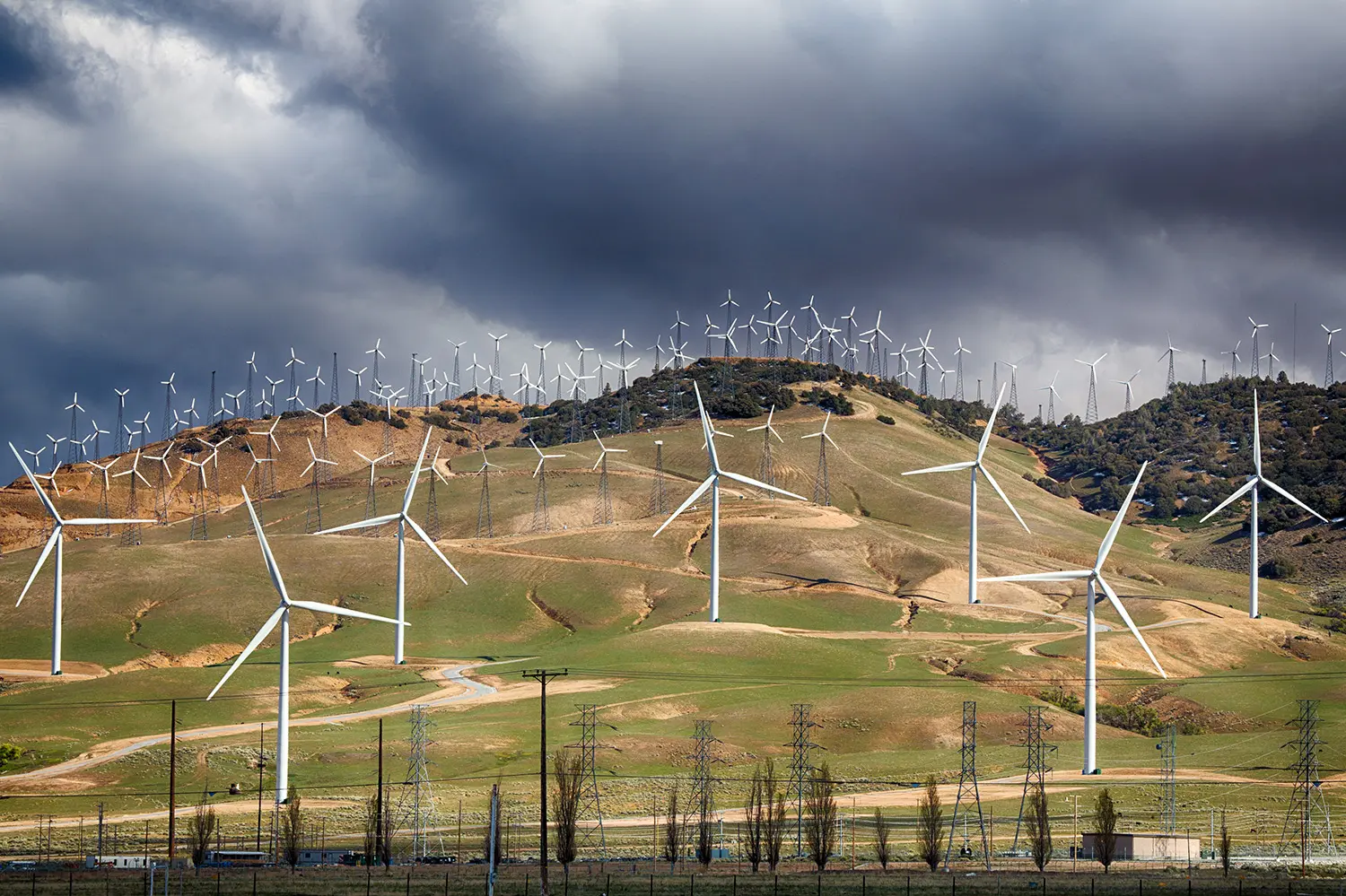
California’s clean energy buildout is being sold as a race against time. State officials warn that unless projects move fast, federal tax credits will vanish, climate targets will slip, and the grid will fall behind. But speed is not the same as progress, and urgency is increasingly being used to excuse flawed projects, override community concerns, and lock in new environmental harms under a green label.
At the center of this push is the California Energy Commission’s opt-in permitting process, created to fast-track large solar, wind, and battery projects by bypassing local approval and imposing a 270-day deadline on environmental review. The stated goal is simple: get steel in the ground.
The problem is that this framework treats opposition, ecological limits, and tribal impacts as obstacles to overcome rather than signals that something may be fundamentally wrong with the project itself.
Fast-Tracking as a False Solution
The opt-in process under AB 205 was designed to accelerate renewable energy deployment by shifting decisions from local governments to the state. In theory, this avoids parochial politics blocking climate progress. In practice, it has become a second-chance lane for projects that failed locally for good reasons.
The denial of the Fountain Wind project exposed the contradiction at the heart of this system. After months of review, the project was rejected due to environmental damage and tribal concerns. Industry groups reacted with outrage, framing the decision as a betrayal of climate goals.
But this reaction reveals a deeper problem: a growing assumption that any renewable project, in any location, is automatically in the public interest. That logic mirrors fossil fuel thinking, where harm is justified by scale, speed, or national need.
A fast process does not make a bad project good. It just makes the consequences arrive sooner.
Centralization Without Accountability
State officials insist the opt-in process is not a rubber stamp, pointing to other approved projects and emphasizing their willingness to deny proposals that fail statutory tests. Yet the structure itself remains troubling.
The entire premise is built on centralizing power while minimizing friction. Local opposition is acknowledged, but explicitly deprioritized. Tribal impacts are “balanced” against megawatts. Ecological damage is weighed against deadlines tied to federal tax policy, not long-term resilience.
This is not climate leadership. It is risk management for developers.
The irony is that California already knows where its clean energy future lies: distributed solar, storage, demand response, efficiency, and community-scale solutions that reduce the need for massive land-use conflicts and new transmission corridors. Yet those solutions remain underfunded, slow-walked, or actively undermined, while utility-scale megaprojects get fast lanes and political cover.
Federal Pressure, State Shortcuts
The urgency driving this process is not organic. It is being manufactured by federal policy decisions that weaponize deadlines. Under the latest federal spending law, renewable projects that fail to start construction by July 4 lose access to Inflation Reduction Act tax credits. That artificial cliff is now being used to justify rushed approvals and weakened scrutiny.
This is a classic false solution dynamic: a crisis created by political choices becomes the excuse for lowering standards and sidelining communities.
California officials argue they must work within this reality. But choosing speed over integrity is still a choice.
What’s Actually at Stake
Three major opt-in projects totaling roughly 1,000 megawatts are now moving through the pipeline. Each will test whether the state is capable of learning from Fountain Wind or whether that denial will be treated as an anomaly to be corrected rather than a warning to be heeded.
At the same time, the state’s budget signals where priorities truly lie. Firefighting and disaster response continue to receive billions, while funding for virtual power plants, offshore wind planning, and equitable clean transportation remains limited or uncertain. California is spending heavily on the consequences of climate change while hesitating to invest in the systems that would prevent them.
The Real Question
The question is not whether California needs to build clean energy. It does.
The question is whether it will repeat the extractive, top-down logic of the fossil fuel era, simply swapping oil rigs for wind turbines and pipelines for transmission lines, or whether it will finally align climate action with justice, ecology, and democratic decision-making.
Getting steel in the ground is easy.
Getting it right is harder.
False solutions thrive when urgency is allowed to override wisdom. California still has time to choose a different path.
Sources
- California Energy Commission, “Opt-In Certification Program” (includes 270-day environmental review timeline):
CEC Opt-In Certification Program - California Legislature, AB 205 (text and history):
AB 205 (LegInfo) - California Energy Commission e-filing, “Signed Order of the Fountain Wind Project” (December 2025) (project denial record):
CEC Signed Order: Fountain Wind (PDF) - California Energy Commission e-filing, “Orders and Resolutions of the December 19, 2025 Business Meeting” (includes findings related to Fountain Wind):
CEC Orders and Resolutions (PDF) - Governor’s Office of Planning and Research, “CEQA: The California Environmental Quality Act” (overview and purpose):
CEQA overview - IRS Notice 2013-29, “Beginning of Construction” rules for renewable tax credits (foundational federal guidance):
IRS Notice 2013-29 (PDF) - Congressional Research Service, R47202, “Tax Provisions in the Inflation Reduction Act of 2022” (tax credit structure context):
CRS R47202 (Congress.gov) - U.S. Department of Energy, “National Transmission Needs Study” (final report, October 2023):
DOE National Transmission Needs Study (PDF) - National Renewable Energy Laboratory, “System Impacts from Interconnection of Distributed Resources” (notes that distributed resources can reduce transmission needs):
NREL Distributed Resources Report (PDF) - California Department of Finance, “2026-27 Governor’s Budget Summary” (budget context):
CA Governor’s Budget Summary 2026-27 (PDF)
01/11/2026 – This article has been written by the FalseSolutions.Org team