
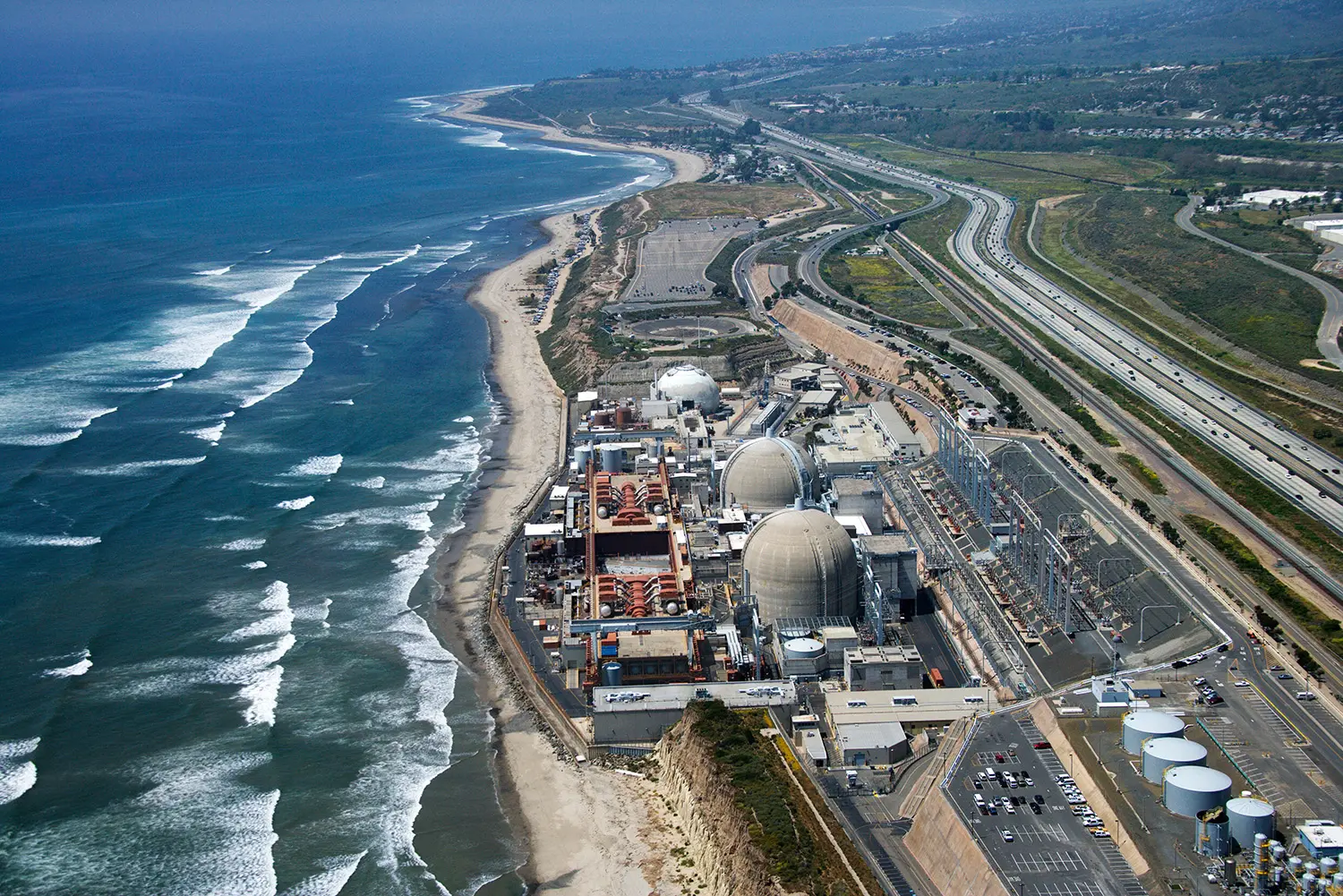
Ontario’s proposed 72.6 percent increase in the price paid for nuclear power is a warning flare for North America. The details may be Canadian, but the underlying story is familiar across the United States: centralized, capital-heavy electricity projects get sold as “essential,” and households are left financing overruns, delays, and long-term risk through higher rates.
This is not a technology debate. It is a governance and incentives problem. When policymakers and regulators prioritize mega projects, they lock customers into decades of payments. When they prioritize modular, fast-to-build resources like solar and storage, they can scale capacity quickly and keep costs more predictable. The question is not whether we need reliable electricity. The question is why ratepayers keep getting handed the most expensive bill.
Nuclear’s cost problem is structural
New nuclear plants are expensive because they are finance-heavy projects with long timelines. A project that takes 10 to 20 years to plan, permit, and build is not just paying for concrete and steel. It is paying for interest, delays, contractor change orders, redesigns, and all the uncertainty that accumulates when you build something too big to fail.
Even when nuclear plants eventually come online, the cost recovery model often means customers pay before power is delivered, and then keep paying for decades to retire the debt. This is not theoretical. It is visible in the United States at Plant Vogtle in Georgia, where federal energy data shows project costs have reached “more than $30 billion,” with public reporting placing the total around the mid-$30 billions range. When that much capital is baked into the grid, rate pressure is not an accident. It is the business plan.
The deeper issue is that nuclear projects concentrate risk while dispersing costs. Utilities and contractors get paid to build. Politicians get ribbon cuttings and “energy independence” talking points. Ratepayers get locked into the financing tail, even if cheaper options were available along the way.
Fossil gas is not the “cheap bridge” it claims to be
When nuclear projects run late or budgets explode, utilities often fall back on gas. Gas plants are pitched as faster to build and easier to permit. The catch is that gas is a fuel-dependent system, which means customers inherit fuel price volatility, pipeline lock-in, and growing regulatory and climate risk over the plant’s lifetime.
Gas also pushes hidden costs onto communities. Even when bills do not immediately spike, the costs show up as degraded air quality, health impacts, and environmental damage. Meanwhile, when policymakers claim gas is a temporary bridge, they ignore that new gas infrastructure tends to operate for 30 to 40 years. That is not a bridge. That is a commitment.
In practice, nuclear megaprojects and gas expansion can reinforce each other: nuclear delays keep gas plants running longer, and gas expansion becomes the default “backup” while nuclear timelines stretch. Ratepayers can end up paying for both.
Solar plus storage is already winning on cost and speed
Solar and battery storage have the opposite profile: they are modular, fast to deploy, and increasingly predictable in cost. A solar project can be built in months, not decades. Storage can be deployed in phases and expanded as demand grows. These technologies do not require fuel, so operating costs are less exposed to market shocks. Most importantly, they can scale without betting the grid on a single massive construction effort.
That does not mean solar and storage are frictionless. Interconnection delays, permitting bottlenecks, and utility resistance are real. But these are solvable governance problems. They are not physics. They are not engineering. They are political choices.
One of the clearest ways to cut through the noise is a cost comparison that shows what households are actually being asked to fund.
What different power choices really cost
| Energy Source | Typical LCOE (USD/MWh) | Build Time | Key Cost Risks |
|---|---|---|---|
| Nuclear (new build) | $120–$200+ | 10–20 years | Cost overruns, delays, financing |
| Fossil Gas (combined cycle) | $45–$90+ | 2–4 years | Fuel volatility, emissions, pipelines |
| Utility Solar | $25–$50 | 6–18 months | Minimal, modular deployment |
| Solar + Storage | $45–$75 | 1–3 years | Battery costs declining rapidly |
Why policymakers keep choosing the expensive path
If solar and storage are cheaper and faster, why do governments keep pushing nuclear and gas? Follow the incentives. Large centralized projects create large regulated assets, and large assets generate large guaranteed returns. They also preserve centralized control. Distributed energy and storage shift leverage toward communities, customers, and smaller developers. That threatens monopoly economics.
This is why the debate is so often framed as reliability versus renewables, even when the real issue is cost and governance. It is why long timelines are treated as inevitable rather than disqualifying. It is why rate increases are marketed as unavoidable instead of presented as the outcome of deliberate policy decisions.
Who pays, and what gets crowded out
When electricity bills rise, the burden hits hardest where people have the fewest options: renters, low-income households, seniors on fixed incomes, and small businesses. Wealthier customers can install solar, buy batteries, or leave expensive utility territories. Everyone else is told to tighten their belts while megaproject budgets expand.
Every dollar committed to nuclear construction overruns or fossil lock-in is a dollar not spent on energy efficiency, demand response, distribution upgrades, community solar, virtual power plants, and storage. Those are the solutions that can reduce peak demand, cut emissions quickly, and lower long-term system costs. They are also the solutions that reduce utility control, which helps explain why they often face the most resistance.
The bottom line
Ontario’s proposed nuclear price shock is not an outlier. It is the logical endpoint of a megaproject strategy that treats ratepayers as an open credit card. The United States has already lived through versions of this story at Plant Vogtle and beyond. The lesson is simple: when the system is designed to reward big construction, households will keep getting big bills.
We do not need to choose between reliability and affordability. We need to stop pretending that the most expensive options are the only serious ones. The cheapest clean grid is not a fantasy. It is being built right now. The only question is whether regulators and politicians will let it replace the old model, or keep forcing the public to finance the past.
Sources
- Lazard (DOE-hosted exhibit). Lazard’s Levelized Cost of Energy Analysis (PDF). energy.gov (PDF)
- U.S. Energy Information Administration (EIA). Vogtle Unit 4 enters commercial operation; costs more than $30 billion. eia.gov
- U.S. Energy Information Administration (EIA). Vogtle Unit 3 begins operating; project costs more than $30 billion. eia.gov
- Associated Press. Georgia Power completes Vogtle Unit 4; nuclear project reaches roughly $35 billion. apnews.com
- U.S. Government Accountability Office (GAO). The lengthening of construction times has significantly increased the costs of nuclear powerplants (PDF, 1979). gao.gov (PDF)
- Georgia Conservation Voters Education Fund. Vogtle Truth Report (public PDF summary of overruns and rate impacts). gcvedfund.org (PDF)
01/16/2026 – This article has been written by the FalseSolutions.Org team