
Who Gets the Water When the Wells Run Dry: Corpus Christi’s Crisis Was Engineered
Corpus Christi’s water crisis did not arrive overnight, and it did not arrive by accident.
Years of drought have pushed South Texas reservoirs to historic lows, but the city’s current emergency is the predictable outcome of policy choices that consistently prioritized industrial growth over public water security. When the long-promised Inner Harbor desalination project collapsed under its own weight, city leaders did not rethink those priorities. They simply found a quieter way to keep industry supplied.
The result is a system where water scarcity is socialized, while water access remains privatized.
Desalination failed. The motive did not.
For more than a decade, Corpus Christi promoted seawater desalination as a drought-proof solution. The Inner Harbor project was pitched as inevitable and necessary, despite sustained opposition from residents, coastal advocates, and fishing communities.
Costs ballooned from initial estimates to well over $1 billion. Environmental risks mounted. Public trust eroded. In 2025, the city finally pulled the plug.
But desalination was never about resilience for residents. It was about guaranteeing long-term water supplies for refineries, petrochemical plants, and export infrastructure clustered along the coast. When desalination became politically and financially untenable, the city did not challenge industrial demand. It redirected extraction inland.
Groundwater as the new sacrifice zone
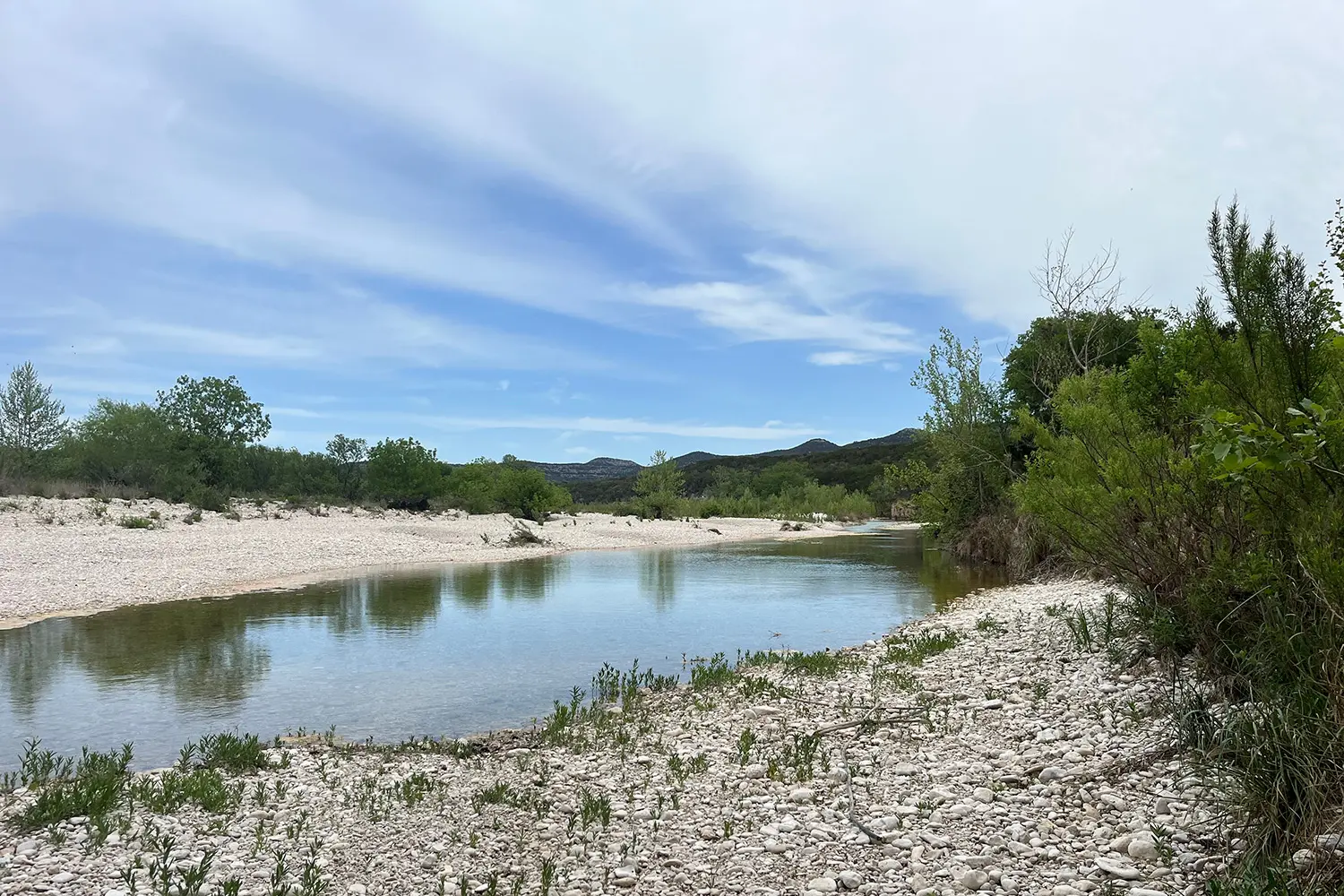
Today, Corpus Christi is pumping millions of gallons per day from deep groundwater wells drilled in rural Nueces County. Water from the Evangeline Aquifer is released into the Nueces River system and routed back to the city’s treatment plants.
Officials describe this as an emergency, drought-resistant stopgap. But for residents living near the well fields, the impacts are already visible.
Private well owners report falling water levels and increasing salinity. These households lack redundancy. When their wells fail, there is no backup pipeline, no emergency allocation, and no compensation.
Aquifers recharge slowly under normal conditions. Under prolonged drought, heavy pumping becomes a one-way drawdown. Calling this a temporary solution does not change the physics.
This is not resilience. It is displacement.
Industrial demand remains untouchable
Throughout the crisis, one question remains conspicuously absent from city policy debates: who uses the most water.
Refineries, LNG export terminals, and petrochemical facilities continue to receive reliable access even as residents are warned to prepare for cuts of up to 25 percent. Conservation messaging flows downhill. Accountability does not.
This imbalance exposes the real function of both desalination and groundwater pumping. These projects exist to de-risk industrial operations in a climate-stressed region. Household water security is treated as collateral.
When city leaders frame the crisis as unavoidable, they obscure the fact that industrial water contracts are policy decisions, not acts of nature.
The threat that isn’t
Industry advocates routinely warn that restricting water access could force companies to scale back or relocate. That threat is often treated as decisive.
It should be interrogated instead.
Reduced water-intensive industrial activity would ease pressure on shared water supplies. It would lower pollution burdens in surrounding communities. It would reduce emissions and public health impacts tied to refining and export infrastructure.
What is framed as economic loss may well be environmental and social gain.
Communities downwind and downstream from these facilities already shoulder disproportionate costs. Water scarcity simply adds another layer.
Emergency narratives, permanent infrastructure
Corpus Christi insists its groundwater program is temporary. History suggests otherwise.
Emergency infrastructure has a habit of becoming permanent once sunk costs accumulate and industrial users depend on it. Temporary exemptions become baseline operations. Short-term fixes become structural commitments.
Meanwhile, alternatives that would actually reduce demand remain underfunded or ignored.
Aggressive conservation targeting large users. Tiered pricing that reflects scarcity. Industrial reuse for non-potable processes. Leak detection and system upgrades. Watershed protection and land-use planning.
None of these offer ribbon-cuttings. All of them threaten entrenched interests.
A pattern, not an exception
What is unfolding in Corpus Christi mirrors a broader pattern across arid and semi-arid regions.
When water becomes scarce, cities do not first ask who uses the most or who benefits most. They look for new sources to exploit. Desalination plants. Deep aquifers. Long-distance transfers.
Each is framed as technical necessity. Each defers the political reckoning.
False solutions thrive where governance refuses to confront power.
Scarcity is being managed. Injustice is being maintained.
Corpus Christi is not running out of water. It is running out of political courage.
The city had years of warning. It chose industrial expansion anyway. It chose megaprojects over demand management. It chose rural aquifers over coastal bays when desalination collapsed.
Residents are now told to brace for cuts while industrial water use remains largely insulated.
That is not shared sacrifice. It is engineered scarcity.
Until Corpus Christi confronts who its water system is designed to serve, each new crisis will be used to justify the next round of extraction. The wells may keep taps flowing today. They also deepen the inequity that will define tomorrow.
False solutions do not fail quietly. They fail by shifting harm onto those with the least power to resist.
Sources
- Texas Tribune. Corpus Christi turns to groundwater wells as drought deepens after desalination project collapse. January 12, 2026.
https://www.texastribune.org/2026/01/12/texas-corpus-christi-water-crisis-desalination-plant-wells/ - FalseSolutions. Desalination in Corpus Christi.
https://falsesolutions.org/desalination-in-corpus-christi/ - FalseSolutions. Corpus Christi Halts Inner Harbor Desalination.
https://falsesolutions.org/corpus-christi-halts-inner-harbor-desalination/ - FalseSolutions. Why Corpus Christi’s Inner Harbor Desalination Project Is a False Solution.
https://falsesolutions.org/why-corpus-christis-inner-harbor-desalination-project-is-a-false-solution/ - FalseSolutions. Corpus Christi’s Desalination Gamble.
https://falsesolutions.org/corpus-christis-desalination-gamble/ - FalseSolutions. The PFAS-Desalination Feedback Loop.
https://falsesolutions.org/the-pfas-desalination-feedback-loop/
01/14/2026 – This article has been written by the FalseSolutions.Org team